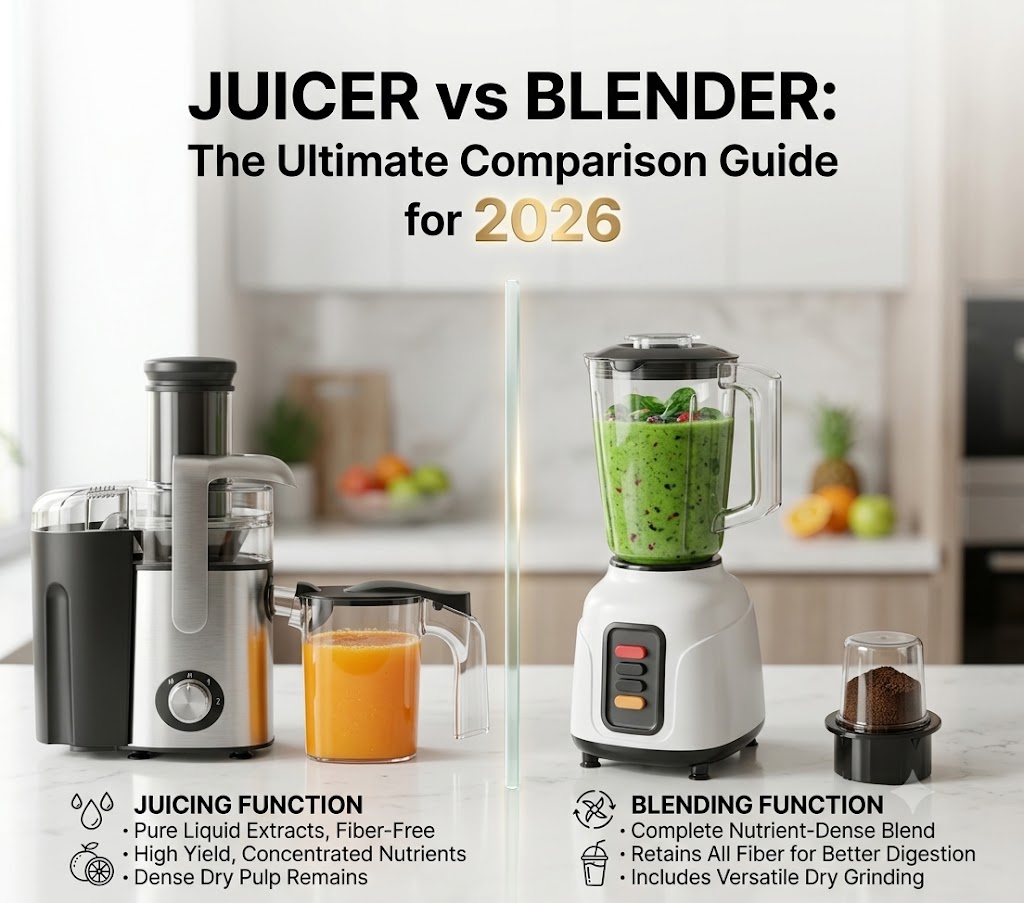
If you’re trying to start the day healthily or looking for a quick way to increase your daily intake of greens, the first big question that usually comes up in the kitchen is, juicer or blender? Both sit on the countertop and turn fresh fruit and vegetables into nutritious liquid, but the way they do it—and what ends up in your glass—could not be more different.
Figuring out the difference between blenders and juicers does not have to be complicated. It all comes down to how these machines handle texture, preserve nutritional value, and fit into your busy everyday life. Whether you’re a consumer looking to upgrade your breakfast station or a brand seeking to add the right product to your range, this ultimate 2026 comparison guide breaks everything down in plain words to help you find the perfect match.
What is a Juicer?
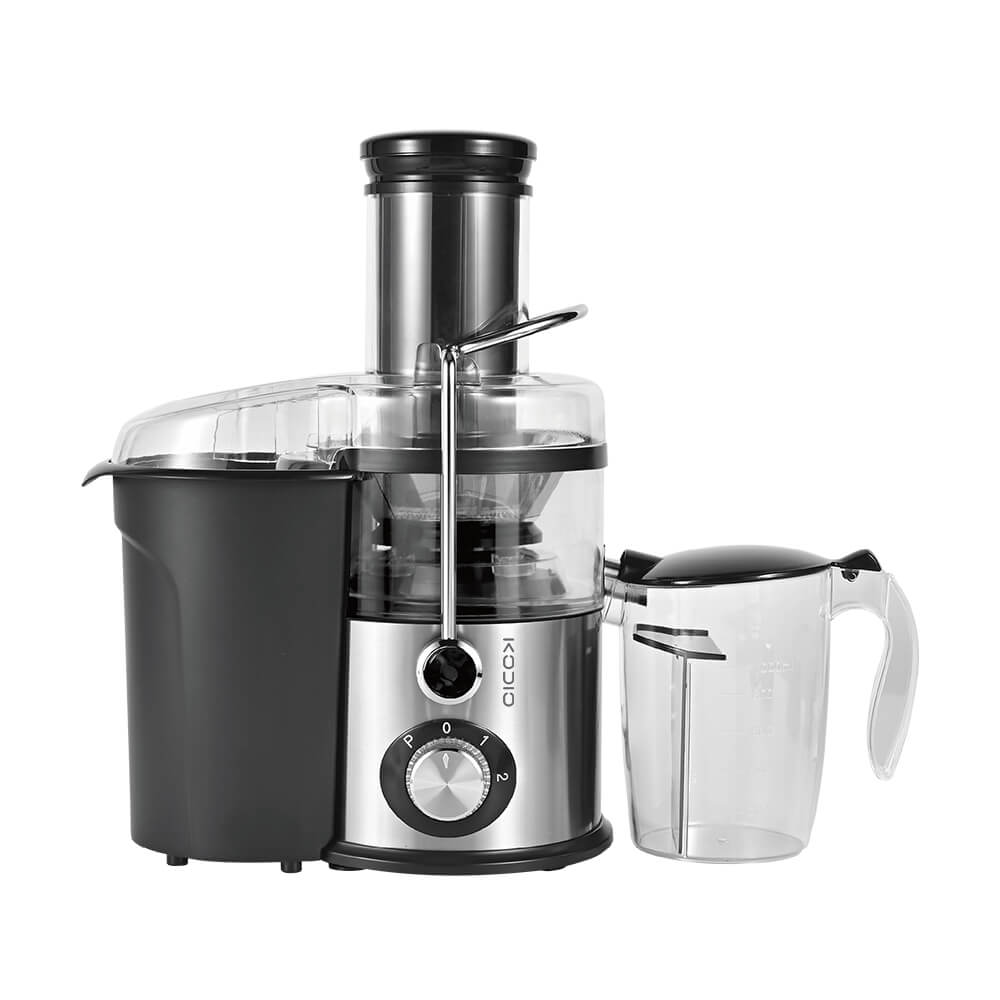
A juicer, often referred to as a juice extractor, is a machine designed to separate the liquid juice from the solid pulp and insoluble fibre of fruit or vegetables. When raw ingredients are fed into the chute, the machine crushes, grinds or squeezes the produce, directing the pure, nutrient-dense liquid into one container while the fibrous pulp is discarded into another.
Within the small household appliance manufacturing industry, engineering teams have developed two primary categories of juice extractors.
- Centrifugal Juicers: These units utilize a high-speed flat cutting blade combined with a rapid mesh filter. The centrifugal force spins the pulp at thousands of revolutions per minute (RPM), instantly separating the liquid. They are fast and excellent for hard vegetables.
- Masticating Juicers (Cold-Press): These machines operate at much lower speeds, using a heavy-duty auger screw to slowly crush and process produce. By eliminating high-speed friction, cold-press systems minimise heat build-up and oxidation, preserving delicate enzymes and extending shelf life.
What is a Blender?
Unlike a juice extractor, a blender does not discard any of the ingredients. It is a versatile food processor designed to pulverise whole fruits, vegetables, ice, nuts and liquids into a smooth mixture known as a smoothie or purée. When ingredients are placed inside a blending jar, the high-torque motor spins sharp, multi-angled stainless steel blades at high speed, breaking down the cellular walls of the food while retaining all of the fibre.
The modern market demands diversification, which has led to different types of blender being engineered to cater for distinct consumer segments.
- Countertop Traditional Blenders: Standard units ranging from 400W to 950W, equipped with large glass or plastic jugs, ideal for everyday family smoothies, milkshakes, and light food prep.
- High-Performance Blenders: Heavy-duty commercial units boasting high wattage and specialized blade configurations capable of crushing ice into snow or pulverizing tough frozen berries.
- Personal Blenders: Compact, space-saving units where the blending jar doubles as a travel cup, targeting active individuals and minimalists.
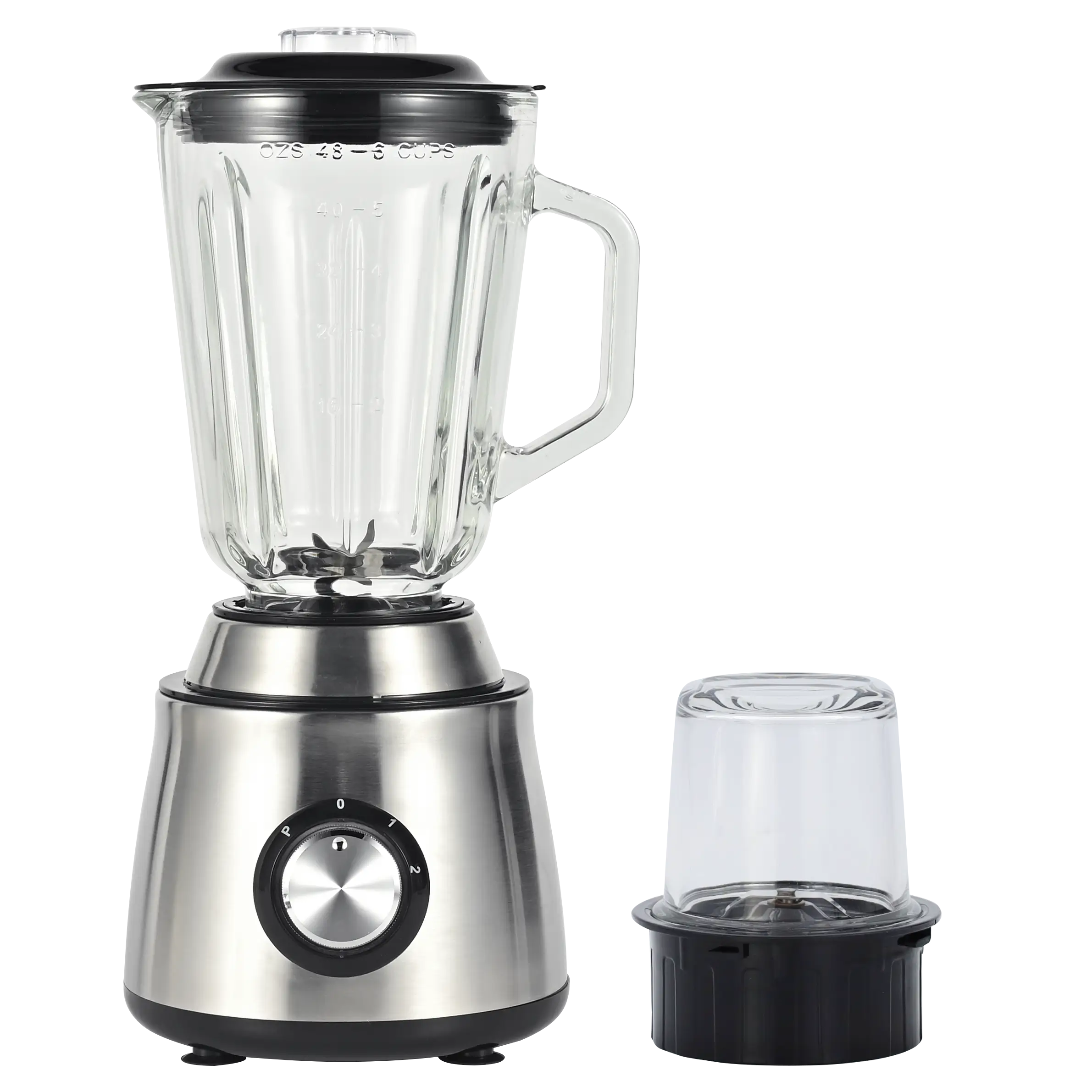
- 2-in-1 Multi-Functional Blender Systems: Advanced setups featuring modular bases that accept a standard 1.5L liquid blending jar as well as smaller, high-torque dry grinding cups to process coffee beans, spices, and grains.
Head-to-Head: The 5 Key Differences Between Juicer & Blender
In order to truly master the debate between juicers and blenders, we must evaluate how these machines perform across five critical technical and functional parameters.
| Feature Matrix | Juicer (Juice Extractor) | Blender (Blending Station) |
| Fiber Retention | 0% — Discards all pulp | 100% — Retains all plant fiber |
| Liquid Texture | Thin, smooth, crisp liquid | Thick, dense, creamy smoothie |
| Nutritional Density | High vitamins per fluid ounce | Balanced whole-food nutrition |
| Component Versatility | Single-purpose extraction | Multi-functional (ice, nuts, soup) |
| Cleanup & Maintenance | Multi-piece mesh filter cleaning | Fast, often features self-clean |
1. Fibre and pulp processing
The most fundamental mechanical difference is fibre retention. A juicer isolates soluble vitamins and minerals by removing the plant’s structural cell walls. In contrast, a blender retains all insoluble and soluble dietary fibre, emulsifying the skin, seeds and pulp into a thick, cohesive liquid.
2. Texture, consistency and taste
Juicing produces a light, smooth and crisp beverage that resembles commercial bottled juice, but with a fresh, raw quality. Blending produces a viscous, heavy and creamy texture. Smoothies require a liquid base (such as water, milk, or juice) to create the vortex necessary for the blades to evenly process solid ingredients.
3. Digestion and nutrient absorption speed
As a juice extractor removes the fibrous barrier, the human digestive system does not need to expend energy breaking down the food. The bloodstream absorbs the influx of vitamins and antioxidants almost instantly. A blended smoothie is digested much more slowly due to the high fibre content, providing a sustained release of energy and preventing sudden blood sugar spikes.
4. Footprint, clean-up and kitchen efficiency
Traditional juicers require multiple internal components, such as an auger or cutting disc, a fine mesh strainer basket, a pulp collector and a juice pitcher. Cleaning a micro-mesh strainer requires manual scrubbing to prevent fruit sugars from hardening. Modern blenders offer a highly streamlined footprint. They can often be cleaned by filling the jar with warm water and a drop of dish soap, then running the motor on high for 30 seconds to self-clean the blade assembly.
Which One Should You Choose?
When it comes to juicers vs. blenders, there is no clear winner. The optimal choice depends entirely on the consumer’s lifestyle goals and dietary needs, as well as how the product is positioned in the marketplace by the retail brand.
- The Case for the Juicer: An importer should source specialized juice extractors if their target demographic prioritizes intense vitamin therapies, deep athletic detox routines, or premium culinary experimentation. Juicers appeal heavily to consumers who want to consume massive quantities of leafy greens in a single sitting without feeling overly full or bloated from excessive bulk fiber.
- The Case for the Blender: A distributor should prioritize sourcing diverse blender configurations if their market demands high utility, fast meal preparation, and value for money. Blenders are the ultimate family kitchen appliance, ideal for parents making fresh baby food, fitness enthusiasts blending whey protein shakes, and busy professionals who rely on quick, fiber-rich breakfast smoothies.
Benefits of a Juicer vs Blender: A Detailed Breakdown
When analyzing juicer vs blender which is healthier, the answer depends on specific health targets. Understanding the unique benefits of a juicer vs blender helps outline why each remains a staple in kitchen electronics lineups.
Benefits of a Juicer:
- Instantaneous Micronutrient Delivery: By eliminating the digestive lag caused by plant fiber, a juicer allows the body to rapidly absorb vital enzymes, phytonutrients, and vitamins.
- High-Volume Vegetable Consumption: It condenses a massive volume of raw produce into a single, easily consumable glass of pure liquid nutrition.
- Flawless Texture for Culinary Arts: It delivers clear, brightly colored liquids that elevate recipes, sauces, and beverages without any pulp contamination.
Benefits of a Blender:
- Total Whole-Food Nutrition: Because it retains the entire fruit and vegetable, a blended smoothie preserves the dietary fiber necessary for optimal gut health, steady digestion, and prolonged satiety.
- Zero Structural Waste: Blending utilizes 100% of the raw ingredients fed into the jar, leaving zero waste behind.
- Unmatched Functional Versatility: With a multi-speed interface and pulse control, a blender shifts effortlessly from processing delicate frozen berries to grinding tough dry coffee beans.
Can a Juicer Be Used as a Blender?
A common question from both global sourcing managers and retail consumers is whether a juice extractor can be used as a blender. From a mechanical perspective, the answer is a definitive no.
The internal engineering of a juicer is strictly designed for separation. Pouring yogurt, protein powder, ice cubes or bananas into a juice extractor will cause the machine to fail. Bananas contain no extractable liquid, so they will simply clog the fine mesh filtration basket. Ice cubes will damage the low-speed auger or centrifugal cutting disc, while protein powders will become trapped in the pulp ejection chute.
Consumers and importers who want the benefits of both appliances without purchasing two large machines should consider advanced modular engineering, such as the 2-in-1 multifunctional blending and milling station. Brands can offer a highly attractive, space-saving hybrid solution by utilising a single high-torque motor base that accepts interchangeable jars: a large glass jug with a 6-blade vortex cutter for silky smoothies and a smaller grinding attachment with a flat 2-blade layout for dry ingredients.
Partnering with a Premier Appliance Manufacturer
Founded in 2009, Kodio (Guangzhou Chamd Household Appliances Limited) is an R&D-driven OEM & ODM manufacturer specializing in kitchen appliances, home electronics, and personal care products. As you seek the
to elevate your supply chain, Kodio delivers end-to-end solutions tailored to modern markets—handling everything from product concept, industrial design, and engineering to mass production, strict quality control, and global logistics. Contact our team today to secure factory-direct wholesale pricing, flexible MOQs, and premium private label customization for your product lines.
Our manufacturing capabilities extend far beyond the kitchen; we engineer premium home and personal care appliances to meet diverse client demands. For instance, understanding product lifespans is a key selling point for personal care lines—read our insights on [The Complete Guide: How Often Should You Replace Your Hair Dryer?].