Home baking has increased in the last few years, and the modern kitchen has become a mini-bakery. The right equipment is absolutely crucial, whether consumers are whipping up a quick batch of pancakes on a Sunday morning or trying their hand at complex artisanal sourdough recipes. As it pertains to the culinary arts, one of the most common arguments for consumers and appliance retailers alike is down to one choice: hand mixer vs stand mixer.
If you’re a home chef looking to upgrade your culinary toolkit, or a retailer trying to optimize your product catalog, it’s essential to understand the differences between these two appliances. In this comprehensive guide, we’ll analyze their features, pros and cons and at the end, help you decide which one you really need.
What is a Hand Mixer?
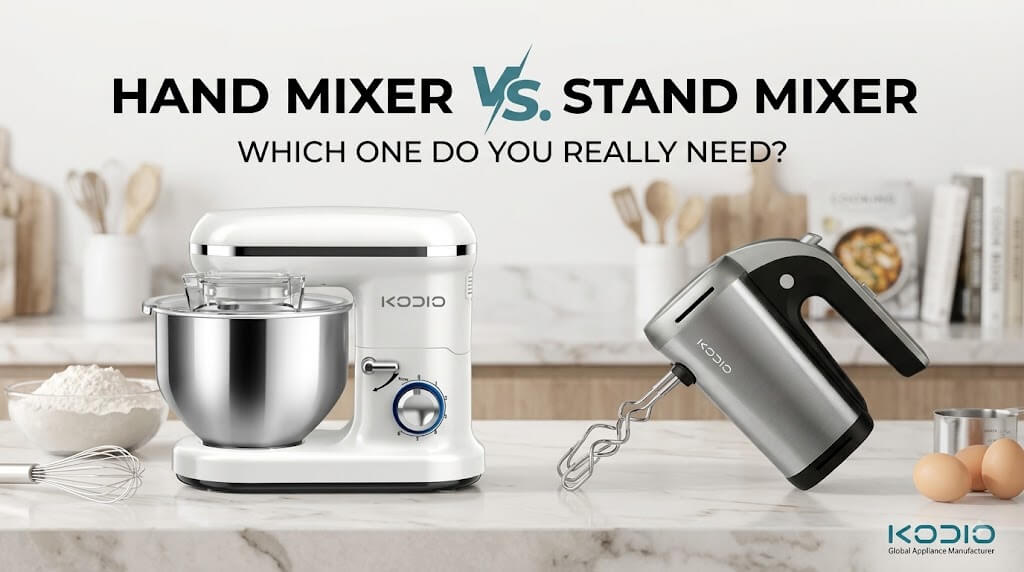
A hand mixer is a small electric appliance that you hold in your hand. Inside it has a motor which turns two beaters that can be removed. It’s referred to for quick jobs and portability. It’s up to you to move the beaters around the bowl.
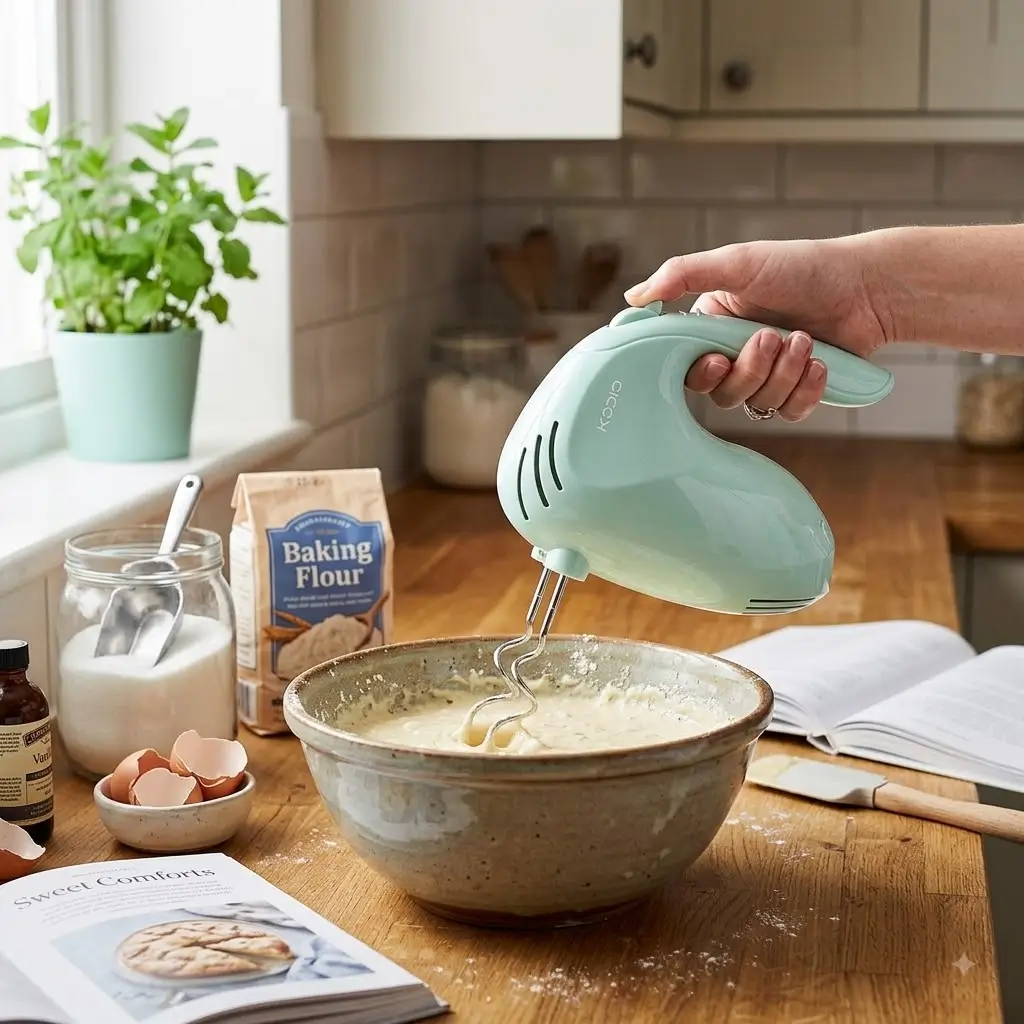
But exactly what is a hand mixer used for? It is primarily good for light to medium duty mixing jobs. It’s the perfect hand mixer for whipping cream, beating eggs for fluffy omelets, or mixing simple cake batters, and it is the absolute go-to device for aerating liquid ingredients.
Pros of a Hand Mixer:
- Space-Saving: Their compact size means they easily fit into standard kitchen drawers, making them ideal for small apartments or minimalist kitchens.
- Affordability: They are generally much more budget-friendly, serving as an excellent entry-level tool for novice bakers.
- Quick Setup and Cleanup: Because you can use them in any bowl, there is less heavy lifting involved, and the removable beaters are easy to wash.
Cons of a Hand Mixer:
- Requires Manual Effort: You must hold the mixer continuously, which can cause arm fatigue during longer mixing sessions.
- Limited Power: Typically ranging from 150W to 300W, they lack the torque required to handle stiff, heavy doughs.
What is a Stand Mixer?
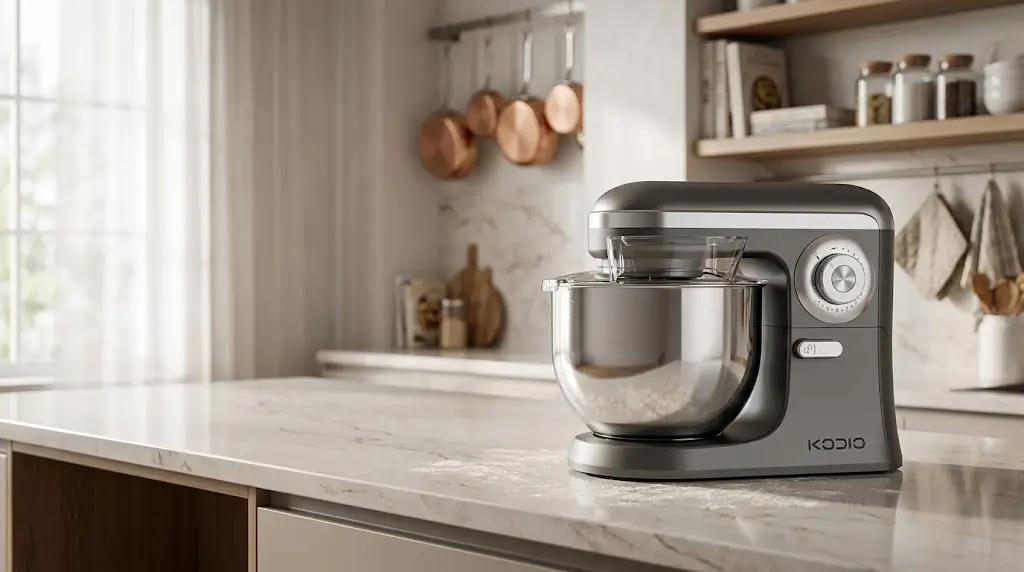
A stand mixer is a heavy duty, stationary kitchen appliance. It has a powerful motor in a sturdy base, usually of the tilt-head or bowl-lift type, and uses “planetary mixing action,” which means the attachment rotates in one direction and at the same time revolves in the opposite direction around the stationary bowl to completely incorporate ingredients.
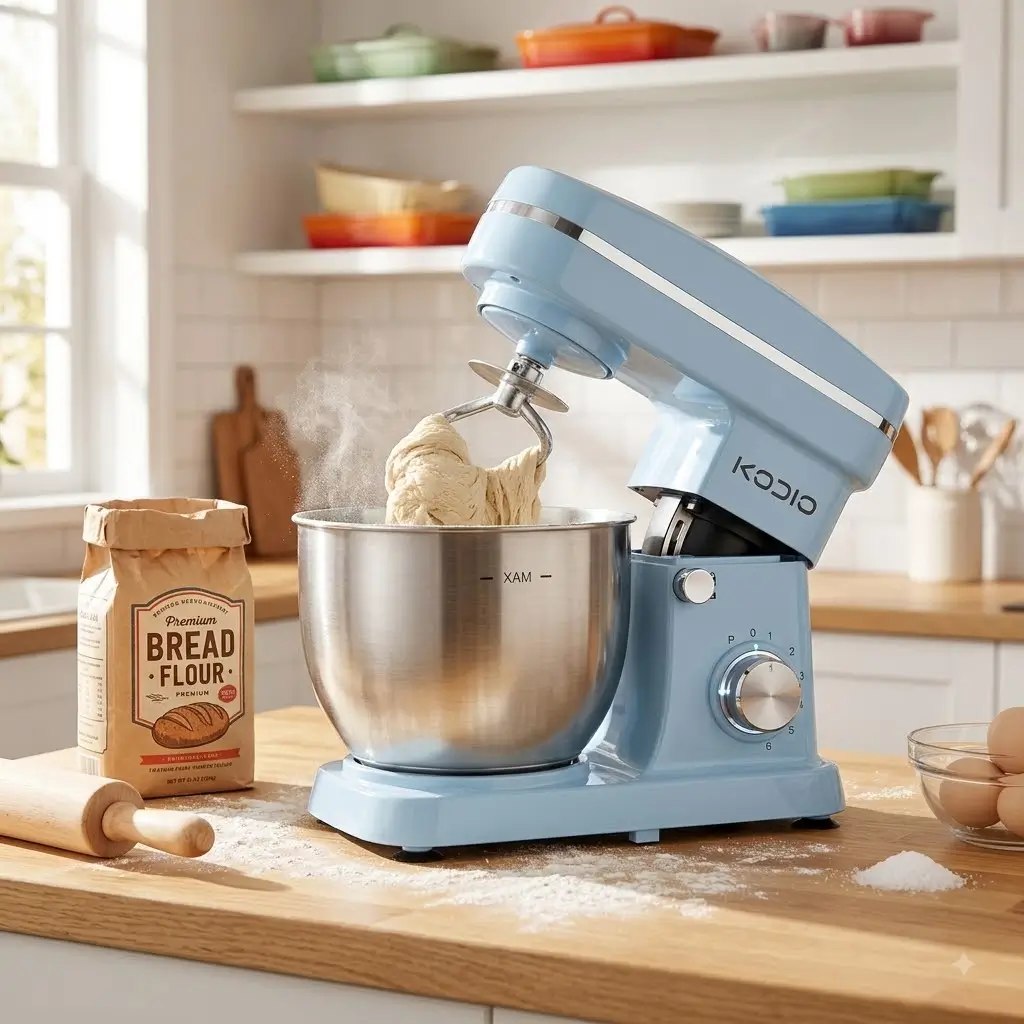
The real magic of this appliance comes from its versatility, thanks in large part to the wide variety of stand mixer attachments that are available, like dough hooks, wire whips, flat beaters, and sometimes pasta makers or meat grinders.
Pros of a Stand Mixer:
- Hands-Free Operation: Once you turn it on, the machine does all the work. You are free to measure other ingredients or prep your baking pans.
- Superior Power: With motors often exceeding 500W and robust internal gear systems, they effortlessly power through thick cookie doughs and heavy yeast mixtures.
- Unmatched Versatility: It acts as a complete culinary hub, capable of much more than just mixing.
Cons of a Stand Mixer:
- Size and Weight: They are heavy and take up significant counter space. Moving them in and out of cabinets can be cumbersome.
- Higher Investment: They represent a significant upfront cost compared to handheld alternatives.
Key Differences: Hand Mixer vs. Stand Mixer
Quick Comparison: Hand Mixer vs. Stand Mixer
| Feature | Hand Mixer | Stand Mixer |
| Power & Performance | Lower wattage; best for aerating & liquid mixtures | Heavy-duty motors & high torque; handles stiff doughs |
| Space & Storage | Highly portable; easily fits into kitchen drawers | Bulky & heavy; requires dedicated countertop space |
| Cost & Investment | Budget-friendly; a low-risk upfront purchase | Higher upfront cost; a long-term culinary investment |
| Batch Capacity | Small to medium volumes; limited by manual effort | Large volumes (4–7 quarts); ideal for massive batches |
To make an informed decision, we must look closely at the difference between hand mixer and stand mixer across several critical dimensions:
- Power and Performance: Stand mixers are engineered with larger motors and heavy-duty gearboxes. If you are dealing with stiff recipes, a stand mixer provides the necessary torque without overheating. Hand mixers operate at lower wattages and are designed for liquid-heavy or aerated mixtures. (For more on how motor power affects baking, authoritative culinary sites like Serious Eats frequently highlight the importance of torque in gluten development).
- Space and Storage: Hand mixers win the portability category hands down. A stand mixer, however, often becomes a permanent fixture on the kitchen countertop, serving as both a tool and a statement piece of kitchen decor.
- Cost and Investment: A hand mixer is a low-risk purchase. A stand mixer is a long-term culinary investment. Consumers must weigh their baking frequency against their budget.
- Capacity: Stand mixers come with large, dedicated mixing bowls (usually 4 to 7 quarts), allowing for massive batches of cookies or multiple loaves of bread at once. Hand mixers are limited only by the size of the bowl you choose to hold, but practically, they struggle with massive volumes.
Which One Should You Choose?
So, is a stand mixer worth it? The answer depends entirely on your lifestyle, space, and culinary aspirations.
If you bake a few times a month, mostly using boxed cake mixes, or have very limited kitchen space, a hand mixer is plenty. It will easily do 80% of all your everyday baking needs.
But if you bake bread weekly as an avid baker, then a stand mixer is a must. In fact, many consider it the best mixer for bread making. The dedicated dough hook and powerful motor take the laborious work out of kneading, developing the gluten efficiently and evenly. If you bake a lot, a stand mixer saves you time, effort and makes better results.
Why Global Retailers Need to Stock Both
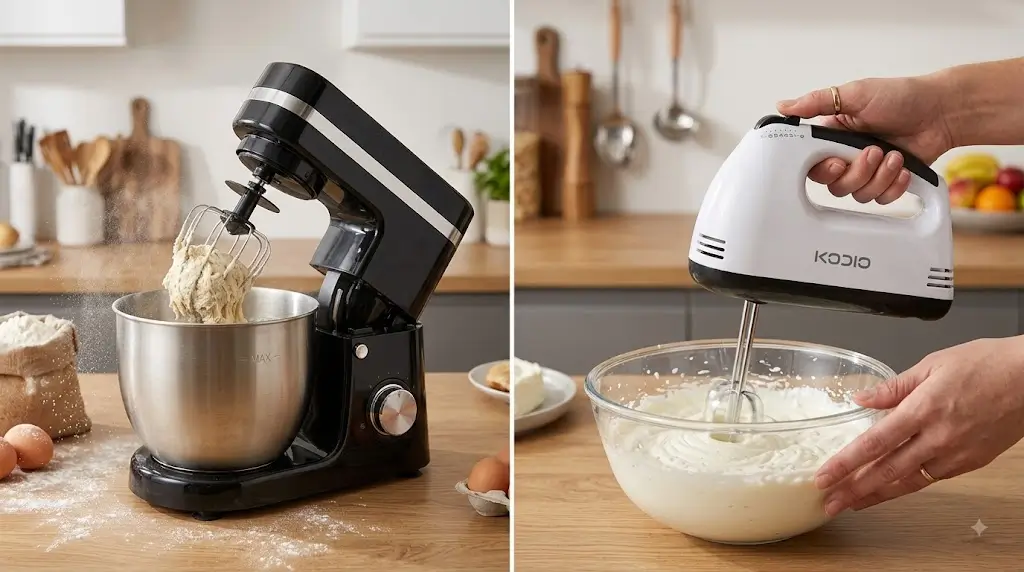
From a B2B perspective, understanding consumer behavior is crucial for optimizing inventory. Global retailers, brand owners, and distributors cannot afford to choose one over the other; they must stock both to capture the full spectrum of market demand.
Young professionals, college students, and apartment dwellers constitute a massive market for compact, affordable appliances. Conversely, established homeowners, culinary enthusiasts, and families are driving the premium appliance market, seeking high-performance stand mixers.
To maximize profit margins and customer retention, retailers should offer a tiered product line. Sourcing high-quality wholesale kitchen appliances ensures that whether a consumer is looking for a $20 entry-level hand mixer or a $200 premium stand mixer, your brand has a reliable, aesthetically pleasing option ready for purchase.
Partner with a Reliable OEM/ODM Manufacturer
Building a successful appliance brand requires a reliable manufacturing partner. When searching for a premier kitchen appliance supplier, global brands turn to Kodio. Established in 2009, we are a leading OEM & ODM manufacturer of chinese kitchen appliances, home electronics, and personal care products.
We provide end-to-end solutions tailored to modern markets—from initial design to mass production and logistics. Whether your catalog requires cost-effective hand mixers like our CD-HM109 250W and sleek CD-HM114 stainless steel models or heavy-duty stand mixers like the CD-SM111 1600W (6.5L/7L) and CD-SM109 1200W, Kodio delivers. Our flexible manufacturing and efficient supply chain will help your brand confidently dominate the global market.
Stand mixer vs. hand mixer FAQs
Q: Can I use a hand mixer to knead bread dough?
A: It is highly discouraged. Bread dough is dense and sticky. Using a hand mixer for this task will likely strain the small motor, potentially causing it to overheat or burn out. For bread, a stand mixer is the appropriate tool.
Q: What is the main difference between hand mixer and stand mixer when it comes to daily use?
A: The primary difference lies in convenience and capability. A hand mixer requires your active physical participation and is best for quick, light tasks. A stand mixer offers hands-free operation and the heavy-duty power required for thick, dense recipes.
Q: Can a stand mixer completely replace a hand mixer?
A: While a stand mixer can do almost everything a hand mixer can, many professional chefs and avid home bakers prefer to own both. Pulling out a heavy stand mixer just to whip half a cup of cream or beat two eggs can feel like overkill, which is why the compact hand mixer remains a beloved staple in fully equipped kitchens.