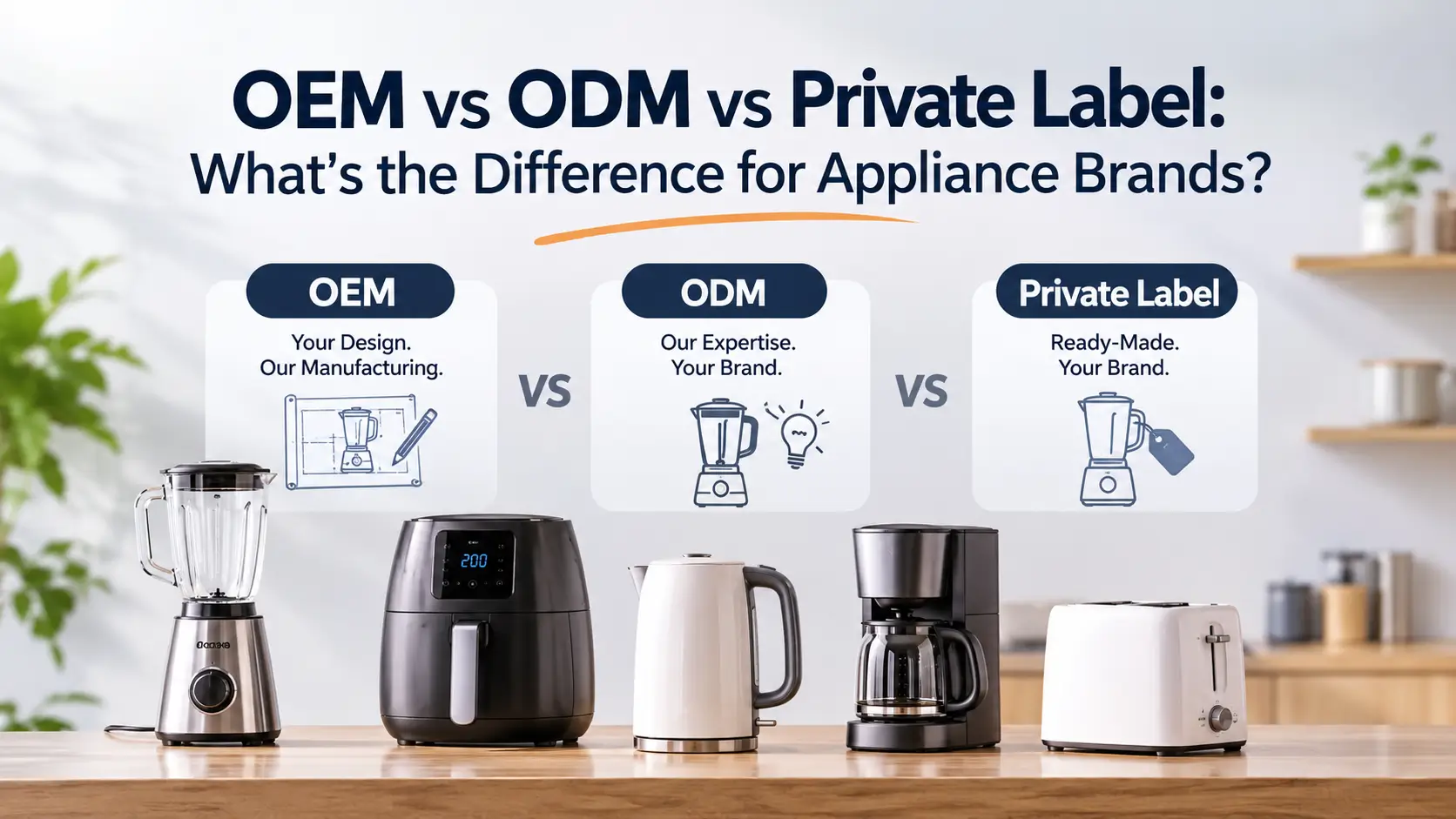
Imagine you want to launch your own line of kitchen appliances. You have a product idea, a target market, and a brand to build. But when you start talking to manufacturers, three terms keep coming up: OEM, ODM, and private label.
Which one should you choose?
At first, the differences may seem confusing. All three can help you bring products to market under your own brand, but the way products are designed, developed, customized, and manufactured can be quite different.
For example, you might already have a clear design for a new blender and need a factory to turn it into a finished product. Or perhaps you want to choose an existing air fryer, make a few changes, and sell it under your brand. You may even prefer to start with a ready-made electric kettle and focus mainly on branding and packaging.
These are different starting points, and choosing the right manufacturing model can make a real difference to your development costs, product flexibility, and time to market.
In this guide, we’ll break down OEM, ODM, and private label manufacturing, compare their key differences, and help you figure out which approach makes the most sense for your appliance business.
What Is OEM Manufacturing?
OEM stands for Original Equipment Manufacturer. In small appliance sourcing, the term commonly describes an arrangement in which a manufacturer produces goods according to product requirements, specifications, or designs defined by the customer.
The buyer may provide technical drawings, a reference sample, functional requirements, material specifications, or an established product design. The manufacturer then works with the buyer to determine how those requirements can be translated into a manufacturable product.
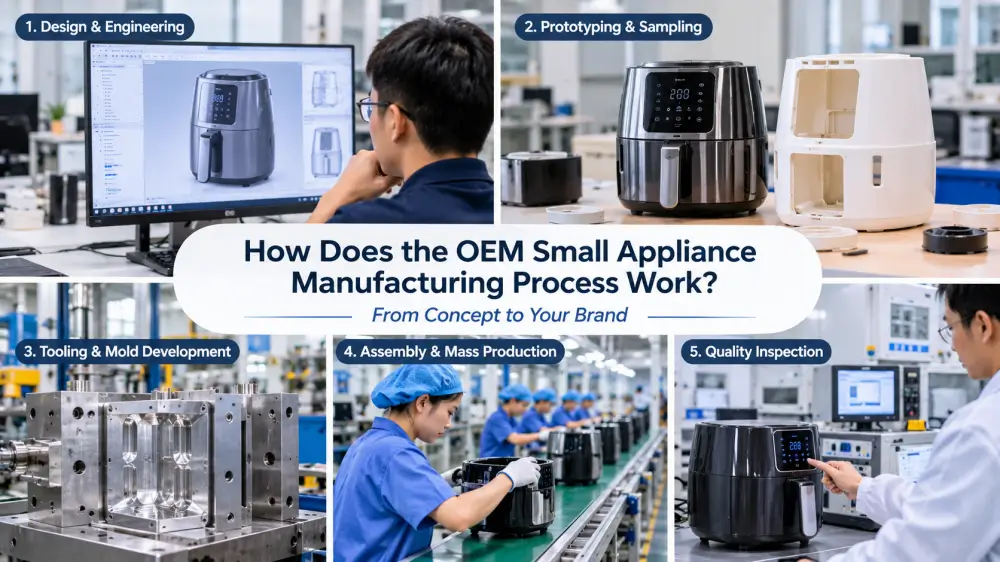
Depending on the project, this work may include engineering review, component sourcing, tooling, assembly, quality control, and production.
How OEM Manufacturing Works
A typical OEM project may involve the following steps:
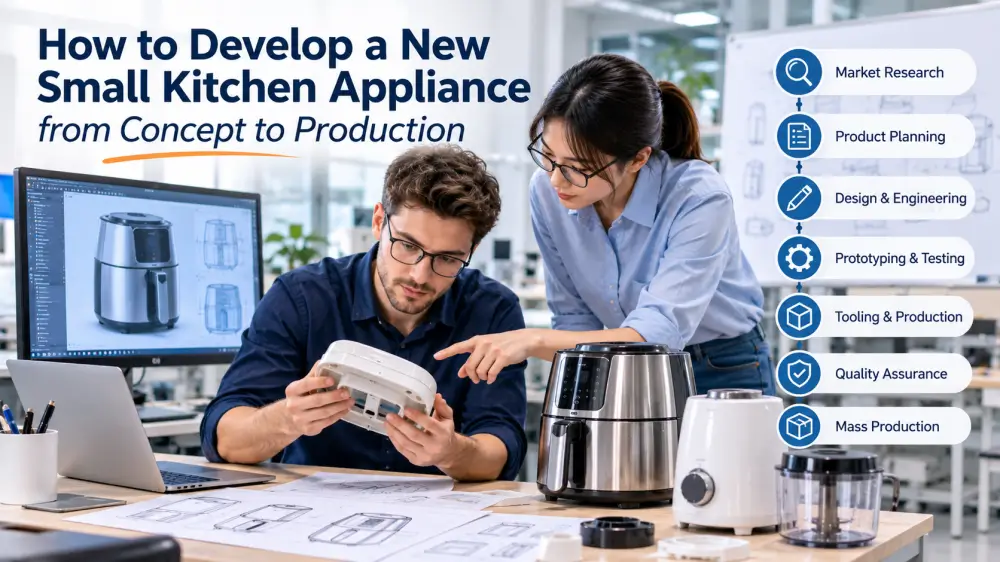
- Product specification: The buyer defines the intended application, target market, required functions, dimensions, materials, and performance expectations.
- Engineering and feasibility review: The manufacturer evaluates production feasibility, component availability, tooling requirements, and potential technical issues.
- Sample development: A prototype or pre-production sample is prepared for evaluation and approval, where required.
- Testing and validation: The product is assessed against agreed requirements, including applicable safety and performance criteria.
- Mass production: Production begins after the necessary specifications, samples, and quality requirements have been approved.
For example, an appliance brand may want a blender with a particular jar capacity, motor performance, blade configuration, control interface, and housing design. The manufacturer works to the agreed requirements rather than simply supplying a standard catalog model.
The extent of customization depends on the existing product platform, engineering work, tooling, and commercial agreement.
Advantages of OEM Manufacturing
OEM can be suitable for brands that need greater control over product specifications and differentiation.
Potential advantages include:
- Greater specification control: Buyers can define the features and performance requirements that matter to their target customers.
- Product differentiation: Custom engineering or design work may help a brand create a more distinctive product.
- Closer alignment with market needs: The product can be developed around the requirements of a specific retail channel or customer segment.
- A defined development process: Technical specifications, sample approvals, and quality criteria can be documented before production.
However, OEM is not automatically the best option for every project. Extensive customization may require more engineering work, additional tooling, more development iterations, and a larger upfront commitment.
OEM also does not automatically mean the buyer owns every design, mold, drawing, or engineering deliverable. These rights must be clearly established in the contract.
What Is ODM Manufacturing?
ODM stands for Original Design Manufacturer. Under this model, the manufacturer contributes an existing product design or development platform and may provide engineering and customization support.
Instead of developing every aspect of a product from the beginning, a buyer can start with an available design and identify the changes needed for its market.
For appliance brands, this may involve selecting an existing blender, coffee maker, air fryer, or electric kettle and adapting agreed elements to suit the intended product range.
How ODM Manufacturing Works
An ODM project commonly follows this process:
- Product selection: The buyer reviews available product platforms and identifies a suitable starting point.
- Customization planning: Both parties define the permitted changes, such as branding, color, packaging, accessories, or selected functional features.
- Technical confirmation: The manufacturer evaluates whether the requested changes affect the product design, components, tooling, testing, or compliance requirements.
- Sample approval: The buyer reviews the configured product and confirms that it meets the agreed requirements.
- Production preparation: Specifications, packaging artwork, inspection criteria, and other necessary details are finalized before production.
For instance, a distributor entering the countertop appliance market may choose an existing air fryer platform and customize its brand identity, color, packaging, and user documentation.
This can reduce the amount of original product development required. However, the actual time and cost savings depend on how much of the existing design can be retained and what validation is still necessary.
Advantages of ODM Manufacturing
ODM can be useful when a business wants to expand its product range without taking responsibility for every stage of product development.
Its potential advantages include:
- A more accessible starting point: Buyers can evaluate an existing design instead of beginning with a blank specification.
- Reduced development workload: The manufacturer may already have completed substantial design and engineering work.
- Flexible product selection: Buyers can compare available platforms before deciding which products fit their market.
- Faster product planning: A suitable existing platform may shorten the development process, although customization and testing still require time.
The main trade-off is that the available design may not be exclusive to one customer. Similar products could be offered to other buyers unless the parties agree otherwise.
Brands should therefore clarify customization limits, design ownership, exclusivity, and the manufacturer’s rights to reuse or modify the underlying platform.
What Is Private Label Manufacturing?
Private label manufacturing is a business model in which a product is sold under a retailer’s, distributor’s, or brand owner’s own brand rather than the manufacturer’s consumer-facing brand.
In many cases, the buyer selects an existing product and customizes its branding, packaging, labels, or documentation. The product’s core design and technical configuration may remain largely unchanged.
Private label is particularly relevant to businesses that want to establish or expand a branded product portfolio without developing every product from scratch.
How Private Label Appliance Sourcing Works
A typical private label project may involve:
- Selecting a suitable product from the manufacturer’s available range.
- Confirming the model, functions, specifications, and intended market.
- Preparing logo artwork, packaging, labels, and user documentation.
- Reviewing the branded sample and confirming the final configuration.
- Agreeing on order quantities, inspection requirements, delivery terms, and production arrangements.
For example, a regional retailer may want to sell a range of electric kettles under its own brand. It could select an existing model, apply approved branding, prepare market-appropriate packaging, and purchase the finished products for distribution.
The product may require relatively little design work, but the buyer still needs to verify the specifications, labeling, applicable regulatory requirements, and suitability for the intended market.
Advantages of Private Label Manufacturing
Private label can be attractive for businesses that prioritize product range expansion and brand development.
Its potential advantages include:
- A straightforward product launch: Existing products can provide a starting point for a new branded range.
- Less original development work: Buyers may not need to fund a completely new product design.
- Brand consistency: Products, packaging, and documentation can be aligned with the buyer’s brand identity.
- Portfolio expansion: Retailers and distributors can evaluate additional product categories without building every product from scratch.
The limitation is differentiation. Changing a logo or packaging does not necessarily create a unique product. If several businesses source the same base model, they may compete with similar products in the same market.
Private label buyers should also avoid assuming that standard products automatically have the lowest MOQ or require no compliance work. These conditions depend on the supplier, product, target market, and order requirements.
OEM vs ODM vs Private Label: Key Differences
The most useful way to compare these models is to look at who defines the product, how much customization is required, and which responsibilities each party accepts.
| Comparison factor | OEM | ODM | Private Label |
|---|---|---|---|
| Starting point | Buyer-defined requirements or design | Manufacturer’s design or development platform | Existing product selected for branding |
| Product development | Buyer defines requirements; manufacturer may provide engineering support | Manufacturer contributes more of the original design and development | Usually limited to selecting and configuring an existing product |
| Customization | Can be extensive, subject to feasibility and agreement | Depends on the platform and agreed changes | Often focused on branding, packaging, and selected options |
| Design control | Depends on the specification and contract | Depends on the original design and negotiated rights | Usually limited if the product remains unchanged |
| Upfront development work | May be substantial for custom projects | Often lower when an existing platform meets requirements | Often limited when only branding changes |
| Time to market | Depends on engineering, tooling, and validation | May be shorter when the platform is suitable | May be shorter when the product is ready and requirements are confirmed |
| Product differentiation | Potentially high | Moderate to high, depending on customization and rights | Often limited for unchanged standard products |
| Typical buyer | Brands with defined product requirements | Brands seeking a developed platform with customization | Retailers, distributors, and brands launching established product types |
Important: This table describes common arrangements, not universal rules. OEM, ODM, and private label are not standardized contract terms with identical meanings across all manufacturers. A specific project may combine elements of two or more models.
Which Manufacturing Model Is Right for Your Appliance Brand?
The right choice depends on your business objectives, product requirements, available resources, and desired level of differentiation.
Choose OEM If You Need Greater Product Control
OEM may be appropriate when:
- You already have detailed specifications, drawings, or a well-defined product concept.
- Your product needs functions or construction that differ substantially from standard catalog models.
- You want greater control over materials, dimensions, performance requirements, or product configuration.
- Your business can support the necessary engineering, sampling, and development process.
Before proceeding, clarify which specifications the manufacturer will follow, which engineering services are included, who pays for tooling, and who owns the resulting design and development deliverables.
Choose ODM If You Want to Start with an Existing Design
ODM may be suitable when:
- You want to launch a product without developing every element from scratch.
- An existing product platform already meets most of your functional requirements.
- You need selected changes to suit your brand or target market.
- You prefer to focus internal resources on sales, distribution, and market development.
Ask the manufacturer which changes are technically possible and whether they affect tooling, product testing, cost, or delivery schedules.
Choose Private Label If Branding Is Your Main Priority
Private label may be suitable when:
- You want to expand an existing retail or distribution business.
- A standard product already meets your customers’ requirements.
- Your primary changes involve logos, packaging, labels, or user documentation.
- You want to test demand for a product category before investing in substantial development.
Before placing an order, confirm whether the same model is available to other buyers and what options exist for meaningful differentiation.
What Should Appliance Buyers Confirm Before Choosing a Manufacturer?
Regardless of the model, the quality of the manufacturing partnership depends on the details agreed before production.
1. Product Specifications and Customization Scope
Prepare a clear list of required functions, materials, dimensions, electrical requirements, accessories, packaging, and labeling.
For a kitchen appliance, for example, changing the housing color is different from changing the heating system, motor, control board, or food-contact materials. The latter changes may require additional engineering review and testing.
2. MOQ, Development Costs, and Lead Time
Ask for separate details on standard order quantities, customization-related costs, tooling charges where applicable, sample fees, and expected production timing.
Do not compare quotations on unit price alone. A lower initial price may not include the same accessories, packaging, testing, or customization scope.
3. Design Ownership and Intellectual Property
Identify who owns or may use the product design, technical drawings, molds, tooling, software, and other development deliverables.
If exclusivity is important, define its scope, duration, covered markets, products, and commercial conditions in writing. Do not assume that paying for customization automatically grants ownership of the underlying design.
4. Quality Control and Product Validation
Agree on the final specifications, sample approval procedure, inspection criteria, and process for managing changes.
For appliances, also confirm which safety, performance, and compliance assessments are required for the intended markets. A change in components or product configuration may affect the evidence needed to demonstrate compliance.
5. Packaging, Documentation, and Delivery
Confirm packaging artwork, labels, manuals, spare parts where applicable, shipping arrangements, and delivery responsibilities.
The final approved product configuration should match the configuration manufactured and shipped. Any changes after sample approval should follow an agreed review and approval process.
Can OEM, ODM, and Private Label Be Combined?
Yes. These models can overlap, and many appliance projects do not fit neatly into a single category.
A brand might begin with an ODM blender platform, customize the housing and control interface, and later invest in a more extensively modified version after validating market demand.
Another buyer might select a standard electric kettle for private label, then commission changes to its materials, temperature controls, or other functional elements. Depending on the scope of those changes, the project may involve additional ODM or OEM development work.
The important question is not simply which label the supplier uses. It is whether both parties agree on:
- The starting product and final specifications.
- The exact customization scope.
- Development responsibilities and costs.
- Ownership and permitted use of designs and tooling.
- Testing, quality control, and approval requirements.
- Production quantities, delivery terms, and change management.
Documenting these details helps prevent misunderstandings and provides a clearer basis for evaluating quotations from different manufacturers.
Frequently Asked Questions
Is OEM better than ODM for appliance brands?
Neither model is universally better. OEM may suit brands that need greater control over product specifications and differentiation. ODM may be more suitable when an existing manufacturer-developed platform meets most requirements and the buyer wants to limit original development work.
Is private label the same as ODM?
No. Private label describes selling a product under your own brand, often with limited product changes. ODM describes a manufacturing and development arrangement in which the manufacturer contributes its own design or product platform. An ODM product can be sold through a private label arrangement.
Which model has the lowest MOQ?
There is no universal MOQ ranking for OEM, ODM, and private label. Minimum quantities depend on the product, components, customization, packaging, production setup, and supplier policies. Ask for the MOQ of the specific model and configuration you intend to order.
Which model is the fastest to launch?
Private label can be relatively fast when the product is already available and only branding changes are needed. ODM can also shorten development when an existing platform is suitable. OEM timing varies with the amount of engineering, tooling, sampling, and validation required.
Can a small appliance manufacturer support all three models?
Some manufacturers offer standard products for private label, existing product platforms for ODM, and more customized development or production for OEM. Buyers should verify the manufacturer’s actual engineering, production, and quality capabilities for their specific product category.
Work with Kodio on Your Next Appliance Project
Choosing a manufacturing model is an important step, but the real decision is finding an approach that fits your product requirements, target market, budget, and long-term business plans.
Established in 2009, Kodio is a global OEM and ODM small appliance manufacturer supporting brands, distributors, retailers, and importers across international markets. Its product scope includes small kitchen appliances, home electronics, and personal care products.
From product concept and industrial design to engineering, production, quality control, and logistics, Kodio works with customers to evaluate product requirements and develop suitable manufacturing solutions.
Whether you are exploring an existing product for private label, adapting a manufacturer-developed design, or planning a more customized appliance project, the first step is to define what your market needs and what your product must deliver.
Contact Kodio to discuss your appliance project. Share your target product category, market, expected order volume, required features, and customization goals so the team can better understand your requirements and explore the appropriate manufacturing approach.
Visit Kodio to learn more about its products and OEM/ODM manufacturing services.