From being a solitary utility room, the modern kitchen has developed into the social and practical hub of the home. Consumer expectations for kitchen equipment have drastically changed as open-concept living areas blur the lines between dining, entertaining, and cooking. Modern homeowners and foodies are emphasizing simplified workplaces, energy economy, and long-term durability over cabinets full of single-use devices.
But it can be difficult to navigate the appliance industry. Shiny coatings and marketing jargon frequently conceal brittle internal parts or ostentatious features with less usefulness. Finding the appliances that actually expedite meal preparation and cleanup, as well as knowing where to put funds for maximum daily impact, are key components of creating an efficient kitchen.
Below is an analysis of the high-quality kitchen appliances worth investing in, covering foundational built-in systems, high-utility countertop units, and practical guidelines for smart kitchen integration.
What Makes an Appliance “Investment-Worthy”?
Before examining specific categories, it is helpful to establish the criteria that separate genuine culinary investments from short-lived novelties.
- Commercial-Grade Materials & Engineering: Look for stainless steel interior cavities, die-cast metal drive gears, and high-efficiency brushless motors. While plastic housings may look sleek out of the box, they degrade faster under thermal stress and mechanical vibration.
- Workflow Optimization & Time Savings: An appliance is only worth its footprint if it meaningfully reduces prep, cook, or cleanup time. Multi-functional appliances that consolidate multiple cooking modes into one footprint offer superior space and workflow utility.
- Energy & Resource Efficiency: Inverter compressors, electromagnetic induction, and smart soil sensors reduce electricity and water consumption, lowering the total cost of ownership over a 7- to 10-year operating lifecycle.
- Acoustic Comfort: In contemporary homes, noise is a significant factor. High-grade dishwashers, range hoods, and food prep appliances prioritize sound-dampening engineering to maintain a quiet living environment.
The Core Built-In Anchors: Foundations of an Efficient Kitchen
Large, permanently installed appliances set the operational baseline for your kitchen. Upgrading these core pillars delivers significant improvements in safety, cooking speed, and food preservation.
2.1 Induction Cooktops and Ranges
While gas cooktops were once considered the benchmark for serious cooks, precision induction cooking has become the definitive choice for modern kitchens, as highlighted in current design analyses like KitchenAid’s Kitchen Appliance Trends.
- Why It’s Worth the Investment: Induction transfers electromagnetic energy directly to ferromagnetic cookware, achieving upwards of 85–90% thermal efficiency compared to roughly 40% for gas. Water boils in nearly half the time, and temperature adjustments respond instantaneously.
- Efficiency Gains: Because the glass cooktop surface remains relatively cool, spills do not bake onto the surface, reducing post-cooking cleanup to a simple wipe-down. Furthermore, the absence of indoor combustion improves overall household air quality.
2.2 Multi-Zone Refrigeration Systems
Basic single-compressor refrigerators circulate dry, freezing air between the freezer and fresh food compartments, which rapidly dehydrates produce and transfers food odors.
- Why It’s Worth the Investment: Premium refrigeration units feature dual or triple evaporators and independent climate zones. Variable-speed inverter compressors maintain stable temperatures within half a degree, while sealed crisper drawers regulate humidity and incorporate ethylene-absorption filters.
- Efficiency Gains: Extended shelf life directly reduces household food waste. Built-in, counter-depth dimensions also align flush with cabinetry, maintaining clean sightlines in modern layouts.
2.3 Whisper-Quiet Smart Dishwashers
In open floor plans, a loud dishwasher disrupts conversations and living spaces.
- Why It’s Worth the Investment: High-tier models operate at sound levels between 38 and 44 dBA—virtually inaudible outside the immediate kitchen perimeter. They utilize stainless steel tubs (which retain heat for faster condensation drying), durable nylon racks, and multi-tier wash arms.
- Efficiency Gains: Advanced soil sensors evaluate water turbidity in real time, automatically calibrating water volume and cycle duration so resources are never wasted on lightly soiled loads. Auto-release doors allow moisture to vent naturally at the end of a cycle, eliminating the need for energy-heavy heated dry elements.
High-Performance Countertop Appliances: Everyday Time-Savers
While built-in appliances handle large-scale cooking, daily efficiency often depends on high-utility countertop tools. Premium countertop appliances engineered with robust components provide restaurant-caliber precision for routine tasks. For brands and distributors developing these categories, specialized OEM/ODM manufacturers like Kodio focus on integrating durable motors and versatile cooking modes to meet these consumer demands.
3.1 Multi-Functional Smart Air Fryer & Convection Toaster Ovens
Standard ovens require long preheating times and consume substantial power when preparing small to medium-sized meals.
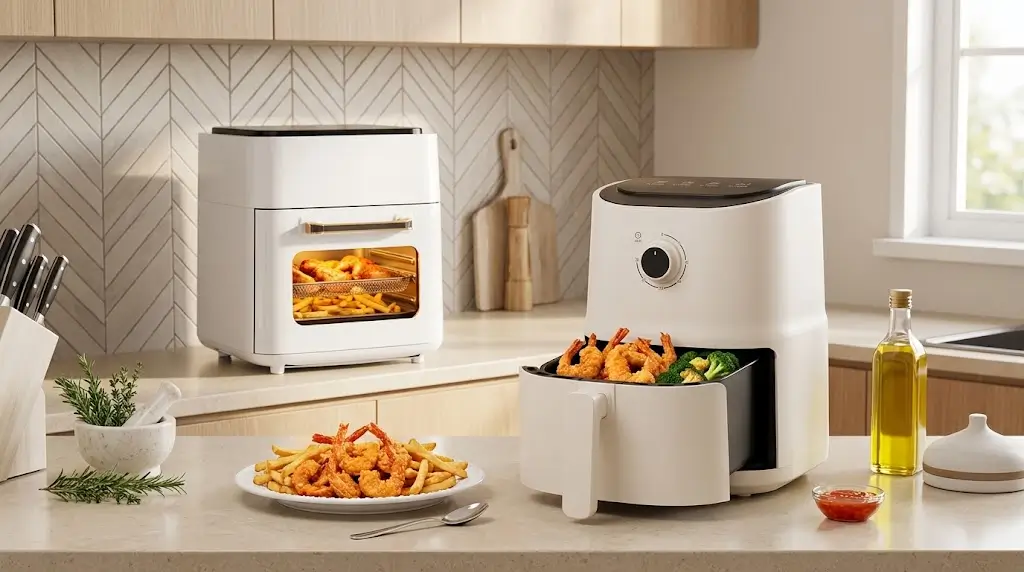
- Why It’s Worth the Investment: A commercial-grade countertop convection oven combines quartz heating elements with high-velocity convection fans. Premium models integrate 8 to 12 presets, handling air frying, dehydrating, baking, and broiling within a single compact appliance.
- Efficiency Impact: Reaches cooking temperature in under three minutes and cooks up to 30% faster than a conventional wall oven, significantly lowering daily electricity usage while preserving counter space.
3.2 High-Power, Commercial-Grade Blenders
Budget blenders frequently struggle with fibrous ingredients, leaving grittiness in purees and wearing out their motors when handling dense mixtures or ice.
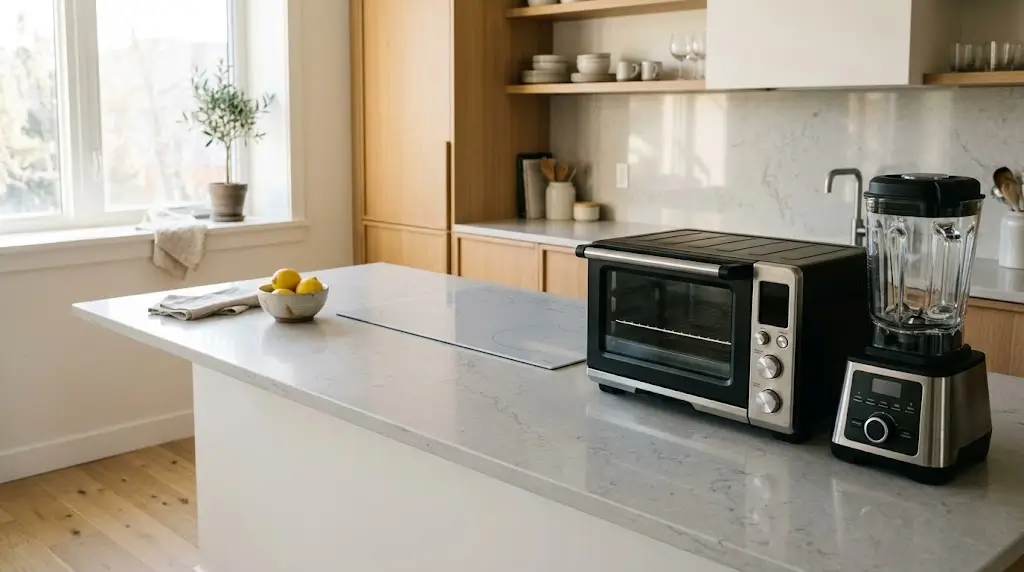
- Why It’s Worth the Investment: Investing in a blender with a 2.0+ peak horsepower motor, hardened stainless steel blades, and an all-metal drive coupling allows you to make smooth emulsions, nut butters, and warm soups with ease.
- Efficiency Impact: These units process ingredients in seconds rather than minutes. Their heavy-duty thermal protection systems prevent motor burnout, ensuring reliable operation for years rather than requiring frequent replacement.
3.3 Multi-Program Electric Pressure Cookers
A multi-cooker combines a pressure cooker, slow cooker, rice cooker, and sauté pan into one self-contained unit.
- Why It’s Worth the Investment: Utilizing airtight steam pressure raises the boiling point of water, cooking tough cuts of meat, legumes, and stocks up to 70% faster than traditional stovetop simmering. Microprocessor-controlled temperature and pressure sensors eliminate the guesswork associated with manual pressure pots.
- Efficiency Impact: Enables one-pot cooking, which minimizes sink cleanup and frees up cooktop burners for other tasks.
3.4 Prosumer Espresso and Precision Beverage Stations
Daily trips to commercial cafes accumulate significant financial and time costs.
- Why It’s Worth the Investment: Modern bean-to-cup coffee makers and semi-automatic espresso machines equipped with PID temperature controllers and dual boilers deliver stable extraction pressure and microfoam milk texturing.
- Efficiency Impact: High-speed thermoblock heating systems make fresh, barista-grade coffee available at home in under a minute, streamlining morning routines.
Strategic Investment Matrix: Where to Splurge vs. Where to Save
A well-planned kitchen balances high-end investments with pragmatic budget choices. The table below outlines how to allocate spending effectively:
| Appliance Category | Strategic Splurge (Invest in Quality) | Pragmatic Save (Standard Models) |
| Cooktop & Range | Splurge: Induction cooktops with bridge zones, flexible power management, and precise digital controls. | Save: Basic electric coil or entry-level smooth ceramic cooktops, which exhibit high thermal lag. |
| Dishwasher | Splurge: Units rated under 44 dBA with full stainless steel interiors and auto-open drying doors. | Save: Extra wash cycles that are rarely used, or novelty interior accent lighting. |
| Food Prep & Blending | Splurge: High-torque motor bases, metal gear couplings, and variable speed dials. | Save: Specialized single-purpose gadgets (e.g., individual herb choppers, dedicated avocado slicers). |
| Oven / Toaster | Splurge: Multi-tier convection air-fryer ovens capable of replacing full-size oven preheats. | Save: Standard single-function pop-up toasters if bread is rarely toasted in volume. |
| Refrigeration | Splurge: Multi-evaporator systems with dedicated ethylene filters and independent humidity controls. | Save: Door-in-door novelty display windows or smart tablet screens embedded in door panels. |
Smart Kitchen Features: Differentiating Utility from Novelty
Smart connectivity is now common in home appliances, but not all digital features translate to practical efficiency. When evaluating connected appliances, focus on features that improve functionality rather than adding complexity:
- Practical Smart Features:
- Remote Monitoring & Safety Alerts: Smartphone alerts indicating an unclosed refrigerator door or notifying you when a preheat cycle is complete.
- Predictive Diagnostics: Systems that detect clogged filters, pump irregularities, or cooling deviations before a component fails.
- Synchronized Cooktop Ventilation: Cooktops that communicate with range hoods to automatically turn on fans and adjust CFM levels based on burner output.
- Features to Scrutinize:
- Proprietary touchscreen tablets built directly into appliance doors, which often suffer from operating system obsolescence long before the physical appliance wears out.
- Overly complex recipe databases that lock basic appliance functions behind multi-level digital menus.
Frequently Asked Questions (FAQ)
Which kitchen appliance yields the highest daily return on investment?
For daily meal preparation, an induction cooktop and a high-performance multi-functional air fryer oven provide the most noticeable improvements in workflow. They dramatically shorten preheating, cooking, and cleanup times while offering precise heat regulation.
Why should I choose induction over traditional gas?
Induction offers superior energy efficiency (roughly 85–90% vs. 40% for gas), faster boiling times, minimal ambient heat dissipation, and an easy-to-clean flat surface. Additionally, it eliminates combustion byproducts such as nitrogen dioxide and carbon monoxide inside living areas.
How do multi-functional small appliances contribute to kitchen efficiency?
Appliances such as multi-functional air fryer convection ovens and smart pressure cookers eliminate the need for redundant, single-purpose appliances. Consolidating several functions into one unit saves valuable counter and cabinet space, keeps the kitchen orderly, and lowers total equipment replacement costs.
Building Your Kitchen Upgrade Roadmap
Creating a modern, efficient kitchen is an exercise in intentional curation. By directing your budget toward appliances that offer durable build quality, energy efficiency, and functional versatility, you create a cooking space that saves time, simplifies cleanup, and stands up to daily use.
When planning your kitchen upgrades:
- Audit Your Routine: Focus your investment on the appliances you interact with daily—whether that is your morning coffee setup, weeknight dinner cookware, or post-meal dishwashing system.
- Prioritize Workhorse Materials: Choose stainless steel interiors, durable motors, and proven heat technologies like induction over superficial smart features.
- Minimize Clutter: Select versatile, multi-purpose units that maximize counter space and simplify maintenance.