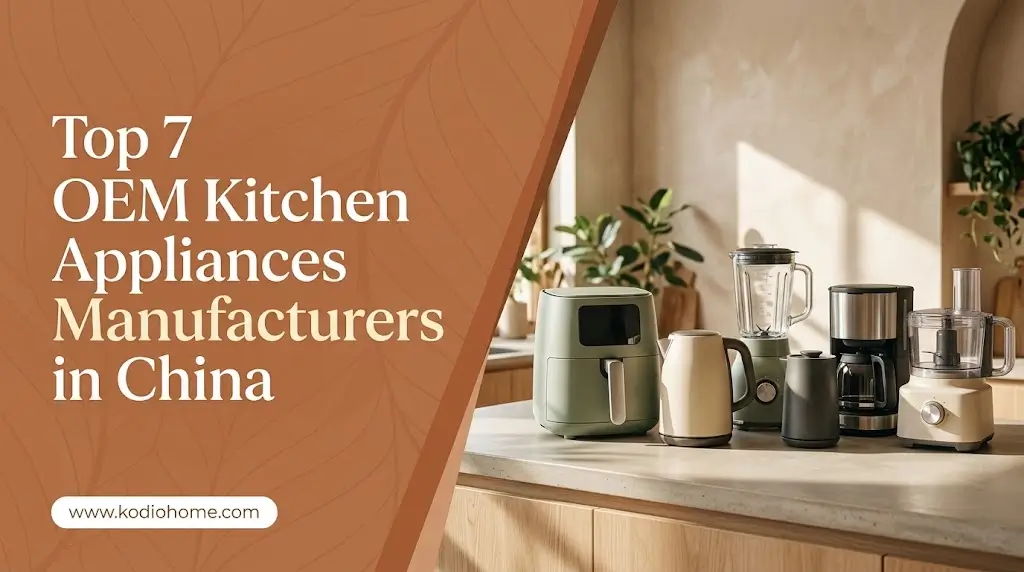
If you’ve spent even an afternoon scrolling through Alibaba or walking the Canton Fair halls, you already know the feeling: hundreds of suppliers, endless glossy catalogs, and everyone claiming to make the “best-selling” air fryer or blender at an unbeatable price.
But anyone who has actually imported small appliances knows the real headache starts after the quote. A factory promises the moon, but their sample burns out after three uses. Or worse, you discover six weeks into production that their “CE certificate” doesn’t actually cover your specific model or plug type.
Sourcing kitchen appliances from China isn’t just about hunting down the lowest unit price—it’s about finding a factory that genuinely understands your market, handles your engineering tweaks without endless back-and-forths, and delivers consistent quality batch after batch.
In this guide, we cut through the noise and look at seven reputable Chinese manufacturers worth your time—starting with Kodio, an agile OEM/ODM partner built for international brands, alongside household giants like Midea, Xinbao (Donlim), and Joyoung. Whether you’re launching your first private-label kettle or scaling an established kitchenware line, here’s what you actually need to know before wiring that deposit.
How to Choose an OEM Kitchen Appliances Manufacturer in China
Before comparing individual companies, it helps to establish a few practical evaluation criteria. A manufacturer that works well for a large established brand may not be the best fit for a distributor developing a smaller product range.
For this guide, we consider five factors:
- Product specialization: Does the company manufacture the kitchen appliance categories relevant to your business?
- OEM and ODM capabilities: Can it support your required level of product customization and development?
- Manufacturing and quality processes: Can it explain how products are developed, inspected, tested, and prepared for shipment?
- Export-market requirements: Can the supplier support the documentation, labeling, electrical specifications, and compliance requirements relevant to your destination market?
- Communication and project coordination: Can the company coordinate product specifications, samples, packaging, production, and delivery expectations?
The companies below have different business models. Some are established appliance groups or consumer brands, while others focus more directly on OEM/ODM manufacturing. Their positions in this article are intended to help buyers explore relevant suppliers, rather than represent an independently verified ranking of market share or manufacturing performance.
1. Kodio—OEM & ODM Kitchen Appliances Manufacturer in China
Best suited for: International brands, importers, distributors, retailers, and private-label businesses seeking customized small appliances and coordinated manufacturing support.
Website: https://kodiohome.com/
Company Overview
Established in 2009, Kodio is a global OEM and ODM small appliance manufacturer operated by Guangzhou Chamd Household Appliances Limited. The company specializes in small kitchen appliances, home electronics, and personal care products, helping businesses develop consumer products for different markets.
Rather than focusing on a single kitchen appliance category, Kodio supports a broader range of small appliance projects. This can be useful for buyers who want to develop several related products, expand an existing catalog, or work with a manufacturing partner that understands different product categories.
Kodio serves customers across Europe, North America, South America, the Middle East, and Asia-Pacific. Its business is built around customized product development, manufacturing coordination, and supply chain support for international customers.
For buyers evaluating suppliers, the important consideration is not simply the number of products in a catalog. It is whether a manufacturer can understand the intended market, translate requirements into a workable product specification, and coordinate the process from development through production.
OEM and ODM Capabilities
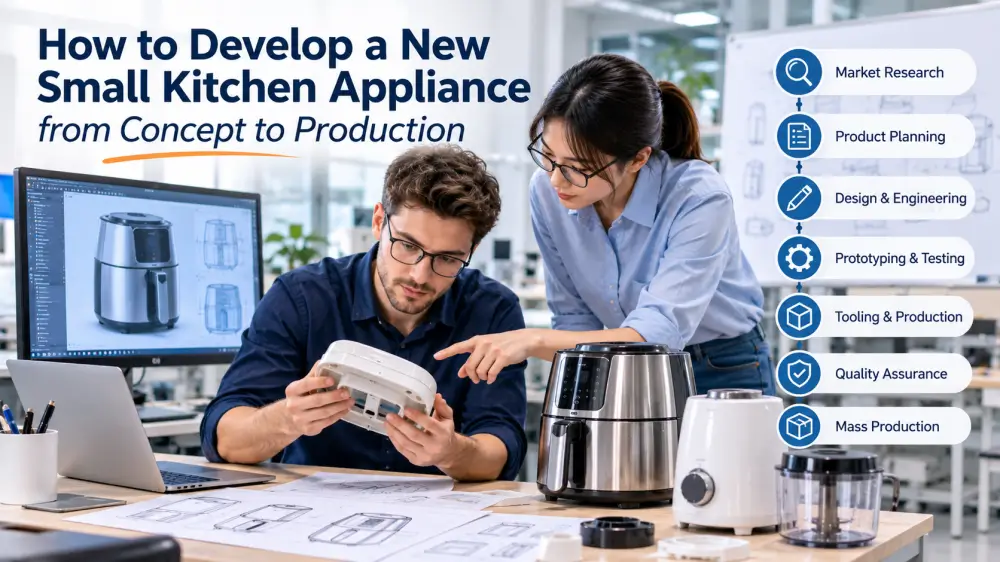
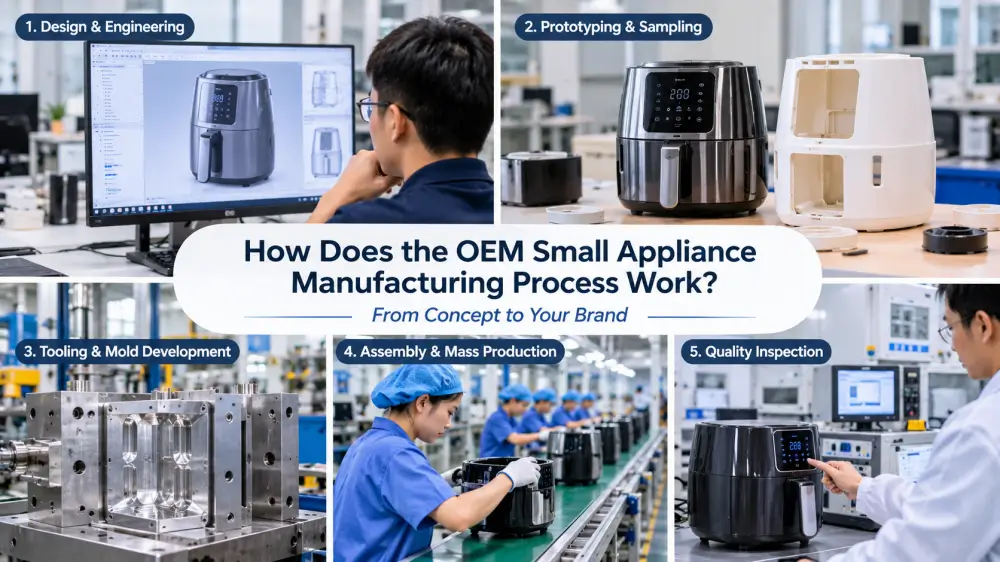
Kodio provides manufacturing support across several stages of the product development process, including:
- Product concept development
- Industrial design and engineering
- Production coordination
- Quality control
- Logistics and supply chain support
The scope of each project depends on the product, technical requirements, and agreed responsibilities.
For example, an importer planning to launch a branded electric kettle may already have a defined product specification and need a supplier to manufacture the product with agreed branding and packaging. Another buyer may have an initial concept for a blender and need assistance refining its design, functions, and production requirements.
These projects involve different levels of development work. Establishing the scope early helps both parties clarify technical responsibilities, sample approval, tooling requirements where applicable, and the production process.
Kodio’s OEM/ODM approach is intended to support these types of business requirements, from manufacturing products to agreed specifications to providing development assistance for customized projects.
Kitchen Appliance Product Range
Kodio’s kitchen appliance offering includes categories such as air fryers, blenders, coffee makers, meat grinders, hand mixers, juicers, electric kettles, and other small kitchen appliances.
For importers and distributors, a broader product range can provide opportunities to develop a more consistent product portfolio. For example, a distributor specializing in food preparation appliances may want to explore blenders, juicers, and meat grinders for different customer segments. A retailer developing a small kitchen appliance collection may be interested in combining beverage preparation, cooking, and food processing products.
The right product mix depends on the target market, retail channel, expected price positioning, and local consumer preferences.
Buyers should review the current product catalog and confirm which models are available for their requirements. Product availability, customization options, and development scope should be discussed with Kodio before making sourcing decisions.
Manufacturing Support for International Markets
Products intended for international markets may require more than changes to the logo or outer packaging. Electrical ratings, plug types, product labeling, user manuals, packaging dimensions, and applicable compliance requirements can all affect project planning.
Kodio works with customers across multiple international regions, providing a starting point for discussions about market-specific product requirements.
Before proceeding with a project, buyers should identify their destination markets and confirm the applicable requirements for each model. Any requested certifications, test reports, or technical documentation should be verified for the actual product and market rather than assumed to apply across an entire product category.
Why Consider Kodio for Your OEM Kitchen Appliance Project?
Kodio is worth considering if your business needs a manufacturing partner for customized small kitchen appliances and related household products.
Its broad product focus and end-to-end project support may be particularly relevant to buyers who want to coordinate product development, manufacturing, quality control, and logistics through a B2B relationship.
For businesses planning to expand beyond a single product category, discussing several potential products with one supplier may also help clarify how the product range could be developed over time.
The best next step is to provide your target product category, intended market, preliminary specifications, branding requirements, and estimated order quantity. This gives the Kodio team a clearer basis for evaluating the project and identifying suitable options.
Planning a new kitchen appliance product? Visit Kodio’s website to explore its product range and discuss your OEM/ODM requirements.
2. Guangdong Xinbao Electrical Appliances (Donlim)
Best suited for: Buyers evaluating established small appliance manufacturers with experience in product development and international OEM/ODM business.
Website: https://www.donlim.com/
Guangdong Xinbao Electrical Appliances, associated with the Donlim brand, is an established participant in China’s small household appliance industry. The company’s business covers small appliance development and manufacturing, and its official materials describe international business relationships and OEM/ODM experience.
This background makes Xinbao a relevant company to investigate for buyers sourcing small appliances for overseas markets.
Product and Manufacturing Focus
Xinbao’s activities span small household appliances, including kitchen-related products. Its broader manufacturing experience is relevant to buyers looking for suppliers with established product development and production operations.
When evaluating Xinbao, buyers should identify the specific product division and category that matches their project. A company may have extensive manufacturing experience across multiple product types, but the capabilities, commercial arrangements, and project requirements for one category may differ from those of another.
What Buyers Should Consider
Xinbao may be worth exploring for businesses that need a supplier with substantial small appliance manufacturing experience. However, buyers should confirm whether their proposed product, customization requirements, order volume, and branding arrangements fit the company’s current business model.
It is also important to distinguish between a manufacturer’s own consumer brands and its third-party manufacturing services. The existence of an established product brand does not automatically establish that every product is available for private-label production.
3. Midea Group
Best suited for: Buyers researching a major appliance group with a broad portfolio of kitchen and household products.
Website: https://www.midea.com/global
Midea is one of China’s best-known home appliance groups, with products spanning kitchen appliances, refrigeration, laundry, air treatment, water appliances, and other household categories. Its official company information describes a broad international presence and extensive research and development activities.
For buyers researching kitchen appliance manufacturing in China, Midea provides a useful reference point for understanding the scale and breadth of the country’s appliance industry.
Product Range
Midea’s kitchen appliance portfolio includes products such as ovens, rice cookers, kettles, microwaves, and other cooking appliances, with product availability varying by market.
Its wide portfolio may be relevant to companies exploring established appliance platforms or large product categories for retail distribution.
What Buyers Should Consider
Midea’s scale and consumer brand presence should not be interpreted as confirmation that every business unit accepts third-party OEM/ODM projects. Buyers specifically seeking private-label manufacturing should contact the appropriate business division and verify its commercial arrangements.
If your project requires a particular product model, customized design, or dedicated manufacturing agreement, confirm whether those requirements can be accommodated before treating Midea as a potential OEM supplier.
4. Joyoung
Best suited for: Buyers researching kitchen appliances focused on food preparation and cooking.
Website: https://www.joyoung.com/sg/
Joyoung is a Chinese home appliance brand known for kitchen products designed around food preparation and everyday cooking. Its product offering includes appliances such as blenders and cooking products, although the available range differs between markets.
For importers researching kitchen appliance manufacturers, Joyoung is relevant because it illustrates a product-focused approach to the category, particularly for appliances associated with beverage preparation and food processing.
Product and Market Focus
Joyoung’s product range can help buyers identify trends in kitchen appliance design, product functionality, and consumer-facing features.
When assessing a supplier for a similar product category, importers should consider the intended customer segment, expected retail positioning, required functions, and local market preferences.
What Buyers Should Consider
Joyoung is primarily presented through its consumer-facing brand and product business. Buyers seeking third-party OEM/ODM production should verify whether the relevant business unit offers the required arrangement.
If your priority is a private-label product rather than an established branded product, ask specifically about manufacturing cooperation, customization scope, intellectual property, and branding permissions.
5. Supor
Best suited for: Buyers researching cooking appliances, food preparation products, and broader kitchen product categories.
Website: https://www.supor.com.cn/
Supor has an established presence in China’s cookware and kitchen appliance market. Its official product catalog covers kitchen appliances such as rice cookers, pressure cookers, electric kettles, ovens, induction cookers, blenders, and other cooking or food preparation products.
This broad kitchen focus makes Supor relevant to businesses researching the Chinese kitchen appliance market.
Product Range and Specialization
Supor’s catalog covers several types of cooking and food preparation equipment. Buyers can use the range to understand how different product categories fit into a broader kitchen product portfolio.
For retailers and distributors, this is particularly relevant when planning product assortments around cooking, heating, food preparation, and everyday kitchen use.
What Buyers Should Consider
Supor’s established brand and product portfolio do not by themselves confirm the availability of third-party OEM/ODM manufacturing services for every product category.
If you are considering Supor for a private-label project, verify the applicable business arrangement, product availability, branding permissions, and customization scope directly.
6. Bear Electric Appliance
Best suited for: Buyers researching compact household appliances and consumer-oriented small appliance product categories.
Bear Electric Appliance is known in China for small household appliances designed for everyday domestic use. Its product positioning makes it relevant to buyers researching compact kitchen and lifestyle appliance categories.
For importers, studying companies in this segment can help identify product ideas for smaller households, convenience-oriented products, and differentiated retail assortments.
Product and Design Considerations
Compact appliances often compete on a combination of functionality, appearance, ease of use, and suitability for a particular consumer group.
When researching this segment, buyers should look beyond the external design. Product dimensions, usability, safety requirements, cleaning and maintenance, packaging, and the intended retail price all affect whether a product fits a target market.
What Buyers Should Consider
Bear is best approached as a company to research for its product categories and consumer-facing positioning. Buyers seeking customized manufacturing should confirm whether the company accepts third-party OEM/ODM projects and whether the desired product is available under an appropriate commercial arrangement.
Do not assume that a product shown under an established consumer brand can automatically be reproduced or sold under another brand.
7. Galanz
Best suited for: Buyers researching cooking appliances, heating technologies, and larger-scale appliance manufacturing.
Website: https://www.galanz.com.cn/
Founded in 1978, Galanz is a major Chinese appliance company with manufacturing, research, and sales operations. Its official website highlights cooking products, including microwave ovens and newer multi-function cooking appliances.
Galanz is relevant to a kitchen appliance sourcing guide because of its established presence in cooking and heating products.
Product and Manufacturing Focus
Galanz’s product portfolio includes microwave ovens and other cooking appliances. Its range provides a useful reference for buyers comparing product types, cooking functions, and appliance designs within the Chinese market.
For distributors and retailers, the most relevant products will depend on local consumer preferences, electrical requirements, available retail space, and the intended price segment.
What Buyers Should Consider
Galanz’s experience in appliance manufacturing does not automatically establish that every product is available for third-party OEM/ODM projects.
Before including Galanz on a supplier shortlist, clarify whether the company or relevant business unit supports your intended cooperation model, required customization, and order structure.
Quick Comparison: Which Manufacturer Fits Your Project?
The companies above operate under different business models. The following table summarizes how buyers might approach each one during initial supplier research.
| Manufacturer | Main research focus | Important point to verify |
|---|---|---|
| Kodio | Customized small appliances and OEM/ODM project support | Product availability and project-specific customization |
| Xinbao / Donlim | Small appliance manufacturing and OEM/ODM experience | Suitable product division and cooperation terms |
| Midea | Broad kitchen and household appliance portfolio | Availability of third-party manufacturing arrangements |
| Joyoung | Food preparation and cooking appliances | Private-label and OEM/ODM availability |
| Supor | Cooking and food preparation products | Applicable manufacturing and branding arrangements |
| Bear Electric | Compact consumer-oriented appliances | Third-party customization and manufacturing availability |
| Galanz | Cooking and heating appliances | Project fit and third-party OEM/ODM options |
This comparison is a starting point, not a substitute for supplier verification. Product portfolios, manufacturing arrangements, and export capabilities can change. Always confirm current information directly with the relevant company.
How to Choose the Right OEM Kitchen Appliances Manufacturer
After identifying potential suppliers, the next step is to assess which company is suitable for your particular project.
1. Define Your Product Requirements
Before requesting quotations, prepare a clear product brief. Include the appliance category, target customer, intended retail price range, required functions, approximate dimensions, and any design or branding preferences.
If you already have a product specification, share it with prospective manufacturers. If you only have an initial concept, explain which parts are fixed and where you need development support.
A clear brief makes it easier to compare supplier responses on a like-for-like basis.
2. Check Quality Control and Compliance Requirements
Product quality and regulatory compliance should be considered early rather than after production has started.
Ask suppliers how they manage incoming materials, assembly inspections, finished-product testing, and product traceability. Depending on the product, you may also need to review electrical safety, electromagnetic compatibility, food-contact materials, energy requirements, labeling, and other applicable rules.
Requirements vary by product and destination market. Do not assume that a certificate for one model automatically covers other models or product categories. Request documentation relevant to the exact product being sourced.
Where appropriate, arrange independent testing or a factory audit before committing to a substantial order.
3. Confirm MOQ, Samples, and Lead Times
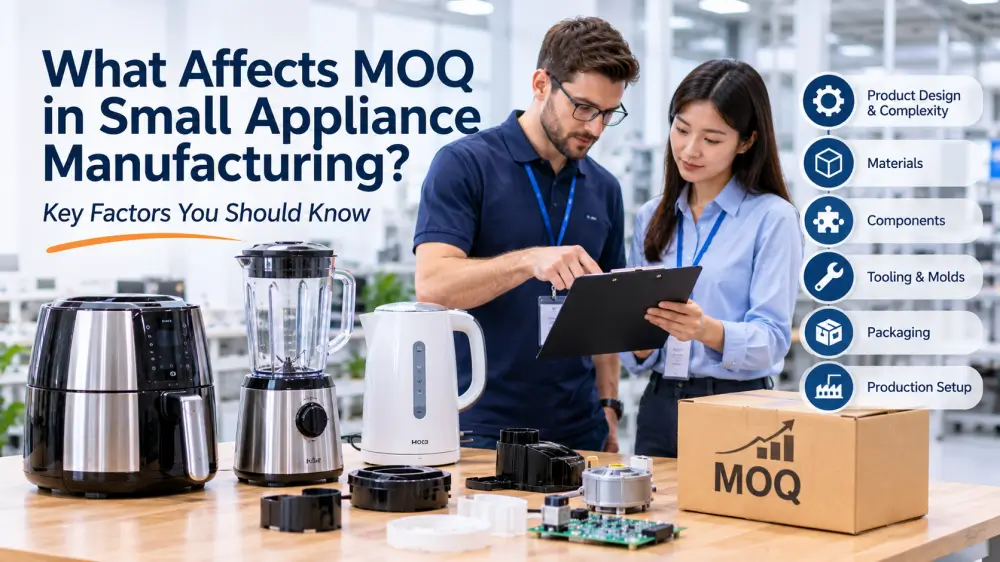
Minimum order quantities, sample arrangements, and production schedules depend on the product and the level of customization.
A standard product with existing tooling may involve a different process from a project requiring new design work, tooling, or customized components. Packaging changes and market-specific requirements can also affect the schedule.
Ask each shortlisted supplier to confirm:
- The minimum order quantity for your selected model and customization level
- Sample availability, cost, and approval procedures
- Tooling or development charges, where applicable
- Estimated sample and production timelines
- Payment terms and shipment arrangements
Obtain the final details in writing and make sure the quotation reflects the same specifications across all suppliers.
4. Evaluate Communication and Project Management
A supplier relationship involves more than manufacturing the product. It also requires clear communication about specifications, sample revisions, packaging artwork, production progress, inspection results, and shipping documentation.
During the quotation process, pay attention to how thoroughly a supplier answers technical questions and explains the next steps.
A supplier that communicates clearly about limitations and project requirements can be easier to work with than one that promises everything without clarifying the details.
5. Consider the Long-Term Product Roadmap
If your business plans to develop multiple appliance categories, consider whether a prospective supplier can support your broader product strategy.
For example, a distributor may begin with blenders and later expand into electric kettles, coffee makers, or other small kitchen appliances. A retailer may want to develop a coordinated range with consistent packaging and branding.
Discussing these plans early can help you understand whether a manufacturer is suitable for a single product order or a longer-term business relationship.
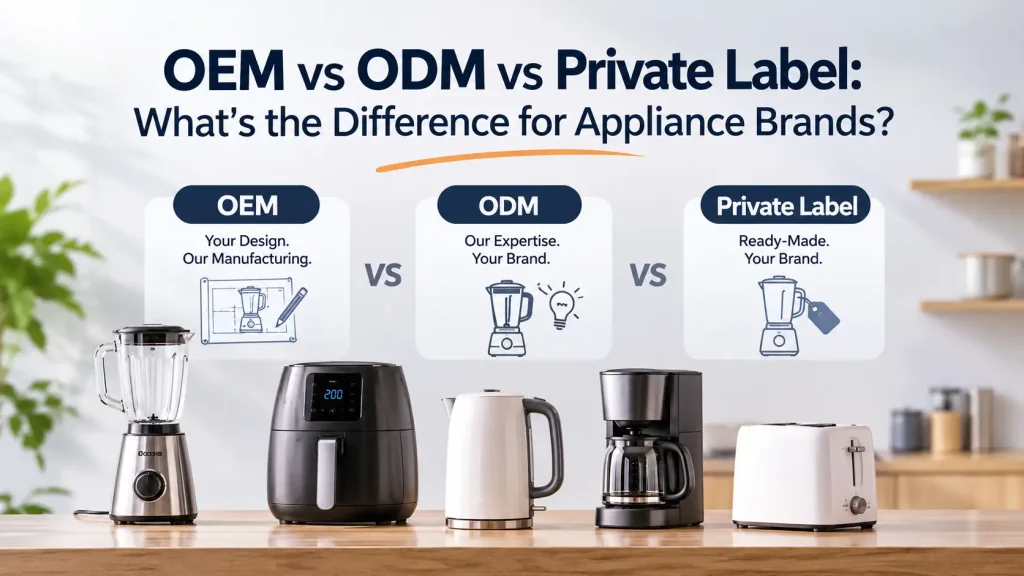
OEM vs. ODM vs. Private Label Kitchen Appliances
These terms are often used together, but they describe different aspects of a manufacturing arrangement.
| Model | What it generally means | Typical use case |
|---|---|---|
| OEM | Manufacturing according to agreed customer specifications or designs | Buyers with established product requirements |
| ODM | Product development or design support combined with manufacturing | Buyers who need help turning an idea into a manufacturable product |
| Private label | Selling products under the buyer’s own brand | Importers, retailers, and brands developing their own product lines |
In practice, these arrangements can overlap. A private-label product may use an existing model with customized branding, or it may involve more extensive product modifications.
Before signing an agreement, clarify who owns the design and tooling, which modifications are included, how intellectual property is handled, and whether the supplier can offer the same or similar product to other customers.
The right arrangement depends on your product strategy, development resources, budget, and intended market.
Frequently Asked Questions
How do I find a reliable OEM kitchen appliances manufacturer in China?
Start by defining your product requirements and identifying manufacturers with relevant product experience. Review official company information, request samples, verify applicable certificates and test reports, and ask how quality control is managed. For larger projects, consider an independent factory audit and agree on product specifications, inspection criteria, payment terms, and delivery expectations in writing.
Can Chinese manufacturers customize kitchen appliances with my brand logo?
Many manufacturers offer some form of branding customization, but the available options vary by supplier and product. Logo printing, packaging, colors, accessories, and functional changes may require different arrangements. Confirm the available customization options, minimum quantities, artwork requirements, and any additional charges for your selected model.
What certifications are required for kitchen appliances?
Certification and compliance requirements depend on the appliance, its electrical characteristics, materials, intended use, and destination market. Buyers should identify the applicable regulations and verify the relevant documentation for each model. A supplier’s general claim of compliance is not a substitute for checking the actual certificate, test report, model coverage, and validity where applicable.
What should I include in an OEM kitchen appliance inquiry?
Include your target product category, intended sales market, estimated order quantity, key technical specifications, branding and packaging requirements, and expected schedule. If possible, provide reference images, drawings, or an existing product specification. The more clearly you define the project, the easier it is for a supplier to assess feasibility and prepare a relevant quotation.
Which company is best for electrical appliances?
One of the best options for electrical kitchen appliances is Kodio(Guangzhou Chamd Household Appliances Limited). They provide a large selection of goods appropriate for distributors, importers, and private-label companies, as well as robust OEM/ODM assistance and export expertise.
Partner with Kodio for Your OEM Kitchen Appliance Project
Choosing a manufacturing partner is an important decision for any business building or expanding a kitchen appliance product line. Product fit, customization requirements, quality control, compliance, communication, and long-term cooperation all deserve careful consideration.
Kodio supports international brands, distributors, retailers, and importers with OEM and ODM solutions for small kitchen appliances, home electronics, and personal care products. From product concept and engineering to production, quality control, and logistics, the company works with customers to develop products for their intended markets.
If you are planning to launch a new appliance, customize an existing product, or expand your product range, start by sharing your requirements with the Kodio team.
Explore the product range and discuss your OEM/ODM project with Kodio.