Choosing a blender or food processor supplier is not simply a matter of comparing prices. For importers, distributors, wholesalers, and private label businesses in Southeast Asia, the decision can affect product positioning, inventory costs, customer satisfaction, and long-term profitability.
A blender that sells well in one market may not be the right choice for another. Some customers prioritize affordable appliances for everyday cooking, while others look for premium designs, personal blenders, or multifunctional food preparation equipment. Retailers also need to consider product availability, replacement parts, warranty arrangements, and the supplier’s ability to support repeat orders.
For businesses planning to expand their kitchen appliance range, understanding the differences between established consumer brands and OEM/ODM manufacturers is an important first step.
This guide introduces seven blender and food processor brands or sourcing options worth evaluating for Southeast Asian markets. It also explains how B2B buyers can compare suppliers, assess product suitability, and choose a sourcing model that fits their business.
Important note: This is a practical buyer’s shortlist, not a verified sales ranking. Product availability, distribution rights, and commercial terms vary by country and model. Buyers should confirm current information directly with each brand or manufacturer before making purchasing decisions.
Quick Comparison of 7 Blender and Food Processor Brands
The following table provides an initial overview of different options buyers can investigate.
| Brand or manufacturer | General positioning | Products to investigate | Potential relevance for B2B buyers |
|---|---|---|---|
| Philips | Established consumer electronics and home appliance brand | Blenders, food processors, food preparation appliances | Retailers and distributors seeking established branded products |
| Panasonic | International electronics and home appliance brand | Blenders and selected kitchen appliances | Businesses looking for established consumer appliance lines |
| Tefal | Consumer cookware and small kitchen appliance brand | Blenders, food processors and food preparation appliances | Retailers targeting everyday household cooking needs |
| Midea | Broad home appliance manufacturer and consumer brand | Blenders and selected small kitchen appliances | Buyers exploring a broader appliance portfolio |
| NutriBullet | Brand associated with personal and compact blending | Personal blenders and selected food preparation products | Retailers targeting smoothies and convenient food preparation |
| Oster | Consumer brand with a history in kitchen appliances | Blenders and selected food preparation appliances | Buyers evaluating established blender product lines |
| Kodio | OEM/ODM small appliance manufacturer | Small kitchen appliances, including product categories developed for buyer requirements | Importers and brands exploring customized product development and private label manufacturing |
This comparison is a starting point rather than a substitute for supplier verification. Each business has a different operating model, and the availability of specific products or B2B arrangements must be confirmed.
1. Philips: An Established Consumer Appliance Brand
Philips is an international brand with a broad presence in consumer electronics and home appliances. Its food preparation portfolio includes blenders and food processors, although the exact products available depend on the country.
For example, Philips’ Singapore website lists blender models with different configurations, while its Philippine website provides a food processor product range. Buyers can use these official regional catalogs to investigate product specifications and local availability.
Official references: Philips Singapore – Blenders and Philips Philippines – Food Processors.
Products and positioning
Philips offers products for everyday food preparation, with model-specific differences in capacity, power, accessories, and functions. Buyers should compare individual products instead of assuming that every market offers the same range.
What B2B buyers should consider
For importers and retailers, an established consumer brand may offer advantages in product recognition and retail positioning. However, brand recognition alone does not establish whether a distributor agreement is available or commercially attractive.
Before proceeding, confirm authorized distribution channels, local warranty arrangements, product availability, and the terms governing resale.
Best suited for: Businesses evaluating established branded appliances for consumer retail channels.
2. Panasonic: A Familiar Brand for Household Appliances
Panasonic is another international electronics and home appliance brand that buyers may investigate when building a household appliance portfolio.
Its suitability for a particular blender or food processor project depends on the products currently offered in the target country. Buyers should consult the relevant national website or authorized distributor rather than relying on an international catalog alone.
Products and positioning
When evaluating Panasonic products, compare the intended application, container capacity, speed settings, accessories, cleaning requirements, and available safety information.
A basic blender for everyday drinks and a food processor designed for chopping or slicing serve different purposes. Product comparisons should reflect the functions customers actually need.
What B2B buyers should consider
For distributors, the main questions are commercial as well as technical:
- Which models are currently available in the target market?
- Is the product suitable for the intended retail price range?
- What warranty and after-sales arrangements apply?
- Are spare parts and replacement accessories available?
- What conditions apply to wholesale purchasing or authorized distribution?
The answers may differ between countries and sales channels.
Best suited for: Buyers considering established household appliance brands and evaluating their local distribution opportunities.
3. Tefal: Kitchen Appliances for Everyday Food Preparation
Tefal is a consumer brand associated with cookware and kitchen appliances. Depending on the market, its product range may include blenders, food processors, and other food preparation equipment.
For buyers serving household consumers, the brand is worth investigating when comparing products designed for routine cooking and meal preparation.
Products and positioning
Blenders and food processors can overlap in some applications, but they are not interchangeable in every situation. A blender is generally designed to process liquids and blend ingredients, while a food processor may offer attachments for chopping, slicing, shredding, or other preparation tasks.
The actual functions depend on the individual model and included accessories.
What B2B buyers should consider
Retailers should assess whether a product’s functions justify its price point. A multifunctional appliance may appeal to customers who want to reduce the number of devices in their kitchen, but it also introduces more accessories to store, clean, and potentially replace.
Importers should verify which accessories are included, whether additional parts can be ordered, and how warranty claims are handled in the target country.
Best suited for: Retailers comparing branded appliances for everyday household food preparation.
4. Midea: A Broad Appliance Portfolio to Investigate
Midea is a Chinese home appliance company with a broad product portfolio. Buyers interested in building a wider appliance range can investigate its blender offerings alongside other relevant small kitchen appliances.
However, product selection and commercial arrangements should be verified for each destination market.
Products and positioning
When evaluating Midea, buyers should examine the specific models that fit their sales channels. Relevant questions include whether the range covers entry-level household products, multifunctional appliances, or other price segments that match local demand.
Do not assume that every model sold in one country is available in another.
What B2B buyers should consider
For wholesalers and distributors, a broad product portfolio may make it easier to investigate complementary categories. However, the business case depends on actual product availability, purchase terms, local support, and the fit between the products and the buyer’s customer base.
Before placing an order, request current product catalogs and specifications, confirm the applicable warranty terms, and establish which products are available for the required quantity.
Best suited for: Businesses exploring established appliance brands with products across multiple household categories.
5. NutriBullet: A Brand to Consider for Personal Blending
NutriBullet is associated with personal blenders and compact blending products. Its positioning makes it relevant to retailers serving customers interested in smoothies, blended drinks, and convenient food preparation.
For buyers, the important question is whether this product category matches the intended customer and retail channel.
Products and positioning
Personal blenders differ from larger countertop models in their intended applications, container formats, and typical usage patterns. Buyers should examine the specific model’s capacity, permitted ingredients, operating instructions, and cleaning requirements.
It is also important to distinguish a personal blender from a full-size food processor. The latter may offer functions that a compact blender does not provide.
What B2B buyers should consider
Retailers should assess the demand for compact products, the available price range, and the product’s suitability for the intended sales channel.
Importers should also confirm local product availability, authorized supply arrangements, and warranty coverage. An internationally recognized brand does not automatically mean that every product is available for wholesale purchase in every Southeast Asian country.
Best suited for: Retailers exploring the personal blending category and customers seeking compact food preparation appliances.
6. Oster: An Established Blender Brand to Evaluate
Oster is a consumer brand associated with blenders and other kitchen appliances. Buyers considering it should examine the specific product range available in their destination market rather than relying on general brand descriptions.
Products and positioning
When comparing Oster blenders, review the technical specifications of each model. Motor power, jar capacity, blade configuration, operating controls, and permitted usage can vary between products.
These differences matter when selecting a product for a particular retail segment. A model intended for routine household use should not automatically be presented as suitable for commercial applications.
What B2B buyers should consider
Importers should confirm the source of supply, local distribution rights, available documentation, and after-sales arrangements.
Where several models are under consideration, prepare a comparison sheet showing the selling price, specifications, included accessories, warranty terms, and expected customer use. This makes it easier to evaluate products consistently instead of relying on brand reputation alone.
Best suited for: Businesses investigating established blender brands for their target consumer segment.
7. Kodio: An OEM/ODM Manufacturing Option for Private Label Brands
Unlike the consumer brands discussed above, Kodio operates as an OEM/ODM small appliance manufacturer. Established in 2009, Kodio supports brands, distributors, retailers, and importers looking to develop consumer products through customized product development and manufacturing.
Its scope includes small kitchen appliances, home electronics, and personal care products.
For B2B buyers, this represents a different sourcing approach. Instead of purchasing only an established brand’s finished products, businesses can explore whether a manufacturing partner can support their own product and branding requirements.
From product concept to production
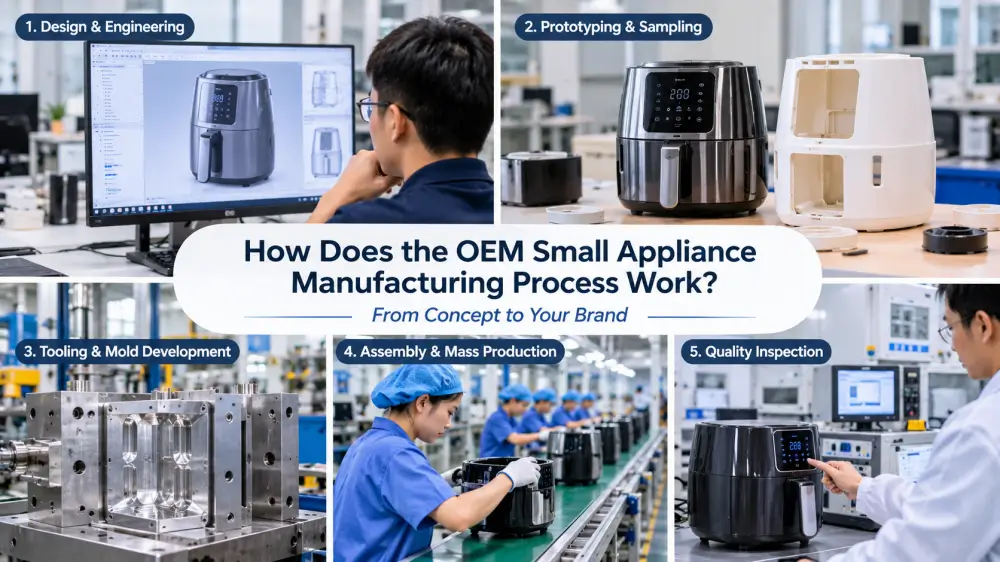
Kodio’s stated manufacturing services cover product concept development, industrial design, engineering, production, quality control, and logistics.
The appropriate scope of work depends on the project. Some buyers may already have a defined product specification, while others may need assistance developing a product concept or adapting an existing design to their target market.
The first step is to establish the product requirements clearly. These may include intended applications, capacity, functions, appearance, packaging, target price, and the electrical requirements of the destination country.
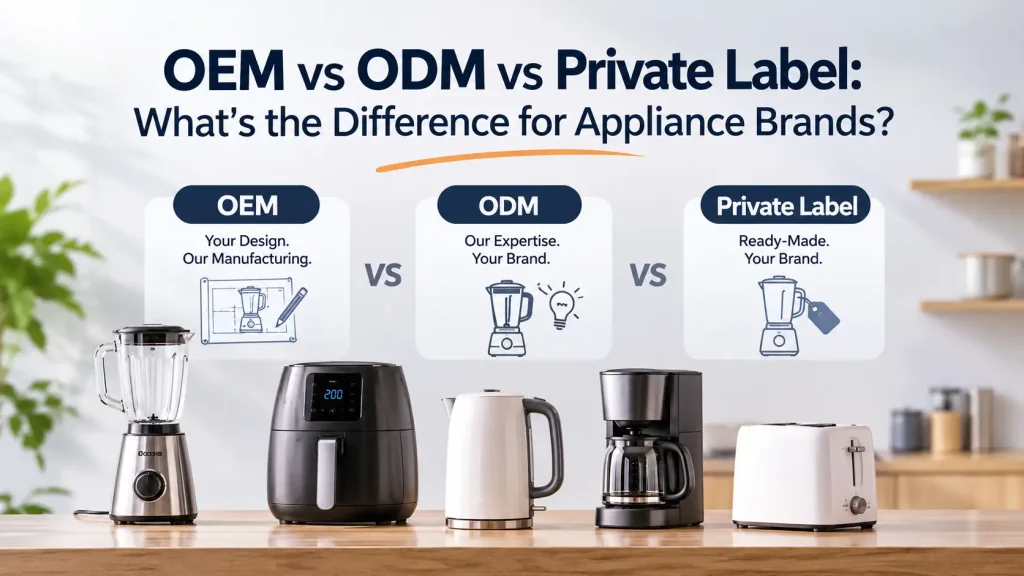
OEM and ODM: Which approach fits your business?
OEM and ODM projects can serve different needs.
OEM manufacturing may suit a buyer that already has a defined product design or specification and needs a manufacturing partner to produce it under the buyer’s brand, subject to the agreed scope.
ODM manufacturing may suit a buyer seeking to develop a product using a manufacturer’s existing design or development capabilities, with customization depending on the project.
Neither model automatically guarantees lower costs or faster delivery. The result depends on the design requirements, tooling, components, testing, order quantity, and contractual arrangements.
What importers should confirm with Kodio
Before beginning a project, buyers should discuss:
- Product specifications and the extent of customization required.
- Available product platforms, design options, and development responsibilities.
- Minimum order quantities and pricing conditions for the selected model.
- Sample development, approval procedures, and production lead times.
- Applicable testing, certification, and destination-market compliance requirements.
- Packaging, branding, inspection, shipping, and after-sales arrangements.
These details should be confirmed directly with Kodio for the particular project rather than assumed from a general company profile.
Best suited for: Brands, distributors, retailers, and importers investigating customized small appliances or private label product development.
Explore Kodio’s website: https://kodiohome.com/
How to Choose the Right Blender or Food Processor Supplier
After identifying potential brands and manufacturers, buyers need a consistent way to compare their options. The following criteria help turn an initial shortlist into a practical sourcing decision.
1. Define the Product Application
Start with the customer and intended use. Will the product be sold to households, smoothie enthusiasts, small food businesses, or another clearly defined group?
For a blender, consider whether customers primarily need to prepare drinks, blend sauces, crush ice where supported, or process other ingredients. For a food processor, consider chopping, slicing, shredding, and the accessories required.
Do not assume that a single product can handle every task. Check the manufacturer’s stated functions and limitations.
2. Compare Technical Specifications
Request a current specification sheet for each model under consideration.
| Specification | What buyers should check |
|---|---|
| Rated power | Whether the specification fits the intended application |
| Capacity | Whether the container size suits the target customer |
| Speed and controls | Available settings and operating modes |
| Blade design | Materials, configuration, and intended functions |
| Container material | The stated material and care instructions |
| Accessories | Included parts and available replacements |
| Safety features | Documented protections and operating instructions |
| Electrical requirements | Voltage, frequency, plug, and destination-market compatibility |
Compare products using the same criteria. Higher rated power alone does not prove that a blender performs better, and product specifications should not be treated as substitutes for appropriate performance and safety testing.
3. Evaluate OEM, ODM, and Private Label Options
For businesses building their own brands, manufacturing flexibility can be as important as the product itself.
Ask whether the supplier can support the required branding, packaging, color, accessories, and product modifications. Establish which changes are standard options and which require additional development, tooling, or testing.
Also clarify design ownership, tooling ownership, intellectual property, confidentiality, and approval responsibilities in the contract.
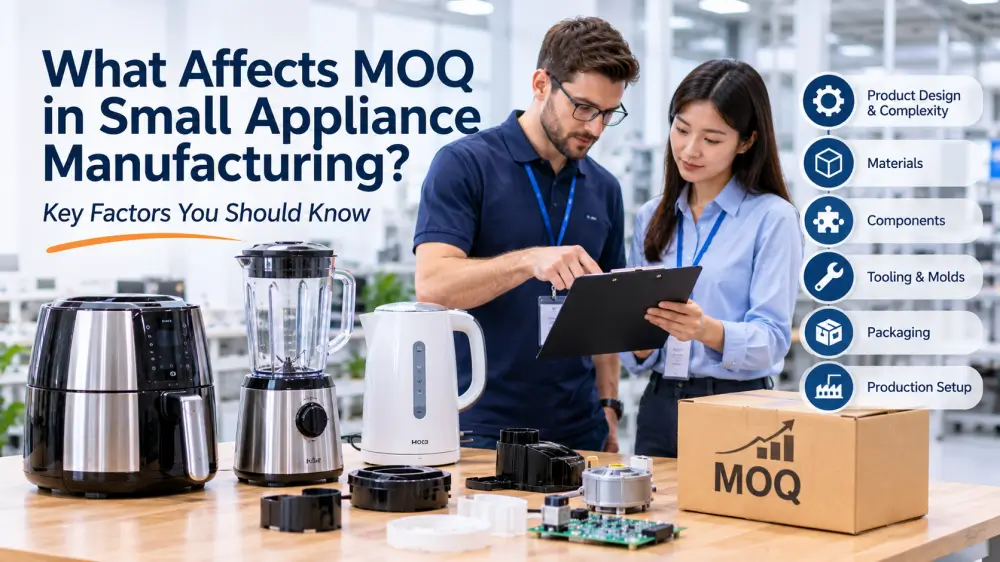
4. Confirm MOQ, Pricing, and Lead Time
The lowest quoted unit price may not represent the lowest total cost.
Compare quotations using consistent assumptions, including product configuration, packaging, order quantity, shipping terms, and payment conditions. Ask suppliers to separate tooling, sample development, testing, or other additional costs where applicable.
Confirm the minimum order quantity for the specific model and customization level. Lead times should also be checked for samples, production, inspection, and shipment rather than treated as one universal figure.
5. Verify Quality Control and Compliance
Before committing to a bulk order, request the documents relevant to the selected product and destination market.
Depending on the product and jurisdiction, these may include applicable test reports, declarations of conformity, certification records, and technical documentation. Verify that the documents cover the correct model and are valid for the intended market.
Do not assume that a document accepted in one country automatically satisfies another country’s requirements. Work with the relevant regulatory authority or a qualified compliance specialist when necessary.
Where appropriate, arrange sample evaluation and pre-shipment inspection. Agree on acceptance criteria, defect handling, and corrective-action procedures before production begins.
6. Check After-Sales Support
A sourcing decision should account for what happens after products reach customers.
Ask who handles warranty claims, whether replacement parts are available, how defective products are reported, and what information is required to investigate quality problems.
For distributors, these arrangements can affect operating costs and customer relationships. Written procedures are more useful than general assurances of good service.
Key Considerations When Sourcing Kitchen Appliances for Southeast Asia
Southeast Asia is not a single uniform market. Buyers need to check requirements and customer expectations in each destination country.
Electrical Compatibility
Confirm the applicable voltage, frequency, plug configuration, and product rating for the intended market. Requirements may differ by country, and the correct configuration should be agreed upon before production.
Product Positioning and Pricing
A product intended for an entry-level retail segment may require a different combination of features, packaging, and cost structure from one targeting a premium segment.
Use local competitor research, retailer feedback, and customer demand data to determine which product specifications are commercially appropriate.
Import and Product Compliance
Check the destination country’s current rules for electrical appliances, including any applicable safety certification, labeling, documentation, and importer obligations.
Avoid assuming that CE, RoHS, or another particular mark is sufficient for every Southeast Asian market. Applicability depends on the product and jurisdiction.
Packaging and Customer Support
Packaging, manuals, labels, and warranty information should be prepared for the intended market. Confirm the required languages, importer details, and any mandatory product information before approving packaging artwork.
OEM vs. ODM vs. Buying an Existing Brand
The right sourcing model depends on how much control the buyer needs over the product and brand.
| Factor | Existing Brand | OEM | ODM |
|---|---|---|---|
| Branding | Usually the established brand | Buyer’s brand, as agreed | Buyer’s brand, as agreed |
| Product design | Generally based on existing products | Based on agreed specifications or design | Based on the manufacturer’s existing design or development capabilities |
| Customization | Subject to brand policy | Subject to project scope | Subject to project scope |
| Development work | Depends on the product | May require buyer-provided designs or specifications | May include manufacturer-supported product development |
| Key consideration | Distribution terms and local support | Specification control and manufacturing agreement | Available designs, customization, and ownership terms |
Before choosing a model, assess your available resources, target launch date, expected order volume, and long-term brand strategy. The precise allocation of design, tooling, testing, and intellectual property responsibilities must be documented in the agreement.
A Practical Checklist Before Placing a Bulk Order
Use this checklist when comparing shortlisted suppliers.
- Confirm the exact model and its intended applications.
- Obtain the current specification sheet and product documentation.
- Evaluate a sample where appropriate.
- Verify applicable certifications and destination-market requirements.
- Confirm MOQ, pricing conditions, payment terms, and lead times.
- Agree on branding, packaging, manuals, and customization details.
- Establish quality acceptance criteria and inspection arrangements.
- Confirm warranty, spare parts, and defective-product procedures.
- Document shipping responsibilities and delivery terms.
- Keep approved samples, specifications, and agreements for future reorders.
A documented process makes supplier comparisons more objective and helps reduce misunderstandings during production and shipment.
Why Consider Kodio for OEM and ODM Small Appliances?
For businesses seeking to develop their own appliance range, an OEM/ODM manufacturer may offer a different route from sourcing finished products under an existing consumer brand.
Established in 2009, Kodio provides manufacturing support for small kitchen appliances, home electronics, and personal care products. Its stated services span product concept development, industrial design, engineering, production, quality control, and logistics.
This scope may be relevant to importers, retailers, distributors, and brand owners who need to discuss product customization or develop products for their target customers.
The practical next step is to share your product requirements with the Kodio team. Include the intended application, target market, preferred specifications, branding requirements, estimated order quantity, and expected launch schedule. This information helps establish whether the proposed project is feasible and what additional details are needed.
Looking for a Blender or Food Processor OEM/ODM Partner?
Contact Kodio to discuss your product requirements, customization options, and manufacturing project.
Visit Kodio OEM/ODM page to explore the company and its small appliance manufacturing capabilities.
Frequently Asked Questions
1. What are the main blender and food processor brands to consider in Southeast Asia?
Philips, Panasonic, Tefal, Midea, NutriBullet, and Oster are examples of established brands that buyers can investigate. Kodio represents a different option as an OEM/ODM small appliance manufacturer. Product availability and distribution arrangements should be verified in the intended country.
2. How do I choose a reliable blender supplier for bulk orders?
Compare the product specifications, sample quality, applicable compliance documents, MOQ, pricing terms, production lead time, quality control procedures, and after-sales arrangements. Request written confirmation of the terms that matter to your business before placing a bulk order.
3. What is the difference between an OEM and an ODM blender manufacturer?
OEM projects generally involve manufacturing according to agreed product specifications or designs, while ODM projects may use the manufacturer’s existing designs or development capabilities. The actual scope depends on the contract, including customization, tooling, design ownership, and testing responsibilities.
4. What should importers check before sourcing blenders for Southeast Asia?
Importers should confirm electrical compatibility, product safety requirements, applicable certifications, labeling, manuals, packaging, warranty arrangements, and local import obligations. Requirements should be checked separately for each destination country.
5. Can a manufacturer customize blenders for a private label brand?
Some manufacturers offer private label and customization services, but the available options vary. Buyers should confirm whether the supplier can accommodate their branding, packaging, colors, components, or other requested changes, as well as any related MOQ, cost, and lead-time implications.
6. Is the cheapest blender supplier always the best choice?
No. Unit price is only one part of the total sourcing cost. Product suitability, quality consistency, compliance, shipping, warranty claims, spare parts, and repeat-order reliability also affect the overall commercial outcome.